SELECTED RESEARCH & PROJECTS

Ideas, objects,
and ways of seeing.

An archive of research and writing across art history, anthropology, and political theory — alongside visual projects and other experiences beyond the page.

Selected research & projects01 — 05
03 /
PAPER / POLITICAL THEORY

Is Democracy in Crisis?

Distinguishing institutional stress from systemic crisis, this essay considers democratic resilience and explores the relationship between power, historical change, and public accountability.

READ PAPER ↗
04 / INTERACTIVE EXHIBITIONVISUAL PROJECT
A virtual kiln illuminated by fire, with rows of ceramic saggars
THE ALCHEMICAL KILN / VIRTUAL EXHIBITIONVIEW PROJECT ↗

The Alchemical Kiln

An immersive exhibition exploring ceramics through fire, sound, and material transformation.

05 / ANTHROPOLOGY · FIELDWORKRELATED TO PAPER 02
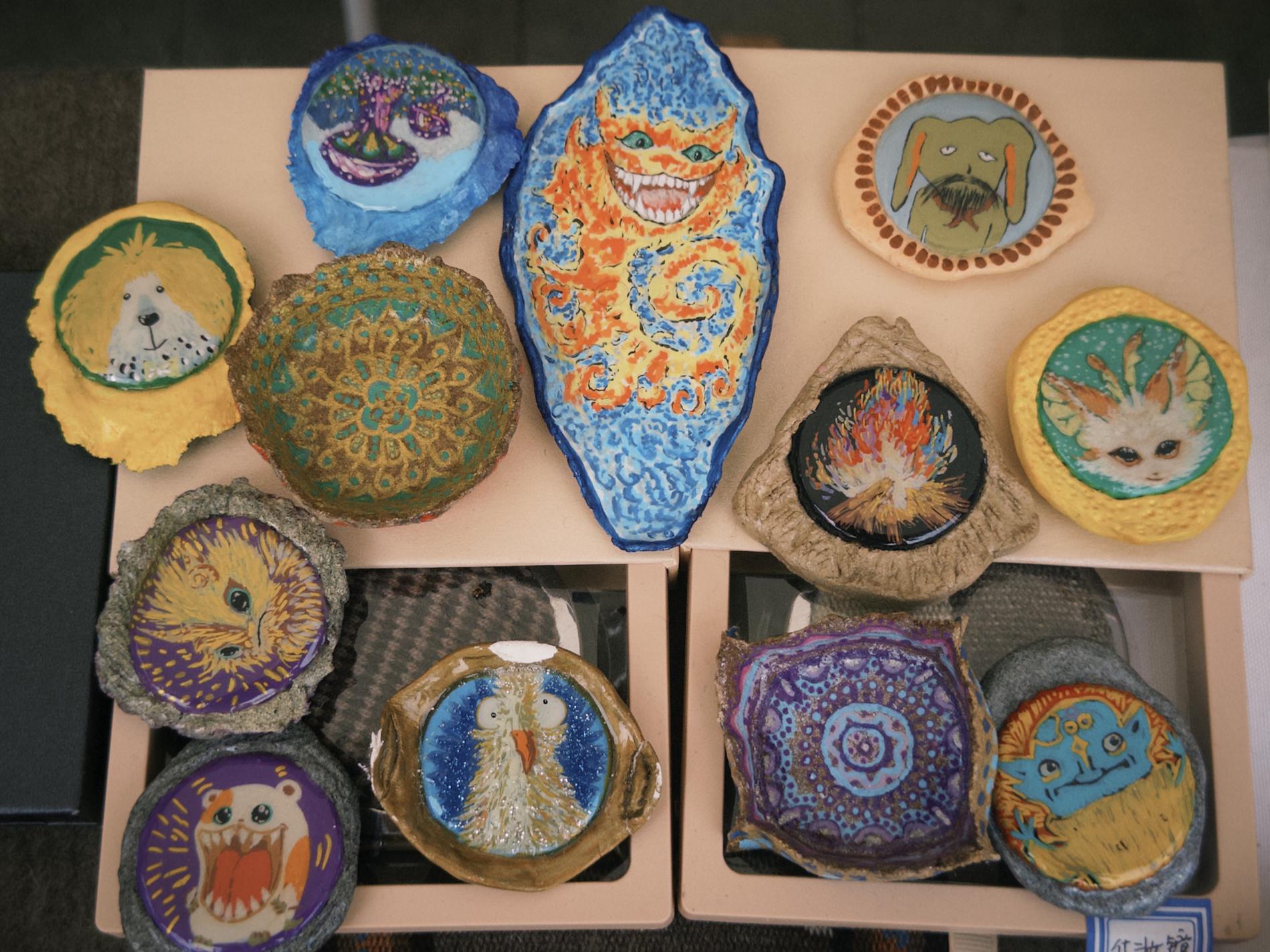
A collection of colourful hand-painted objects
FIELDWORK / MATERIALS & VISUAL ARCHIVEVIEW PROJECT ↗

Jiarong Tibetan Fieldwork

Fieldwork in Qiaoqi, Sichuan, and an exploration of cultural heritage, women’s roles, and community memory, connected to the research paper on Jiarong Tibetan wedding traditions.

06 / BEYOND RESEARCH

Activities.

Debate, Model United Nations, student-led research, and the arts.

EXPLORE ACTIVITIES ↗
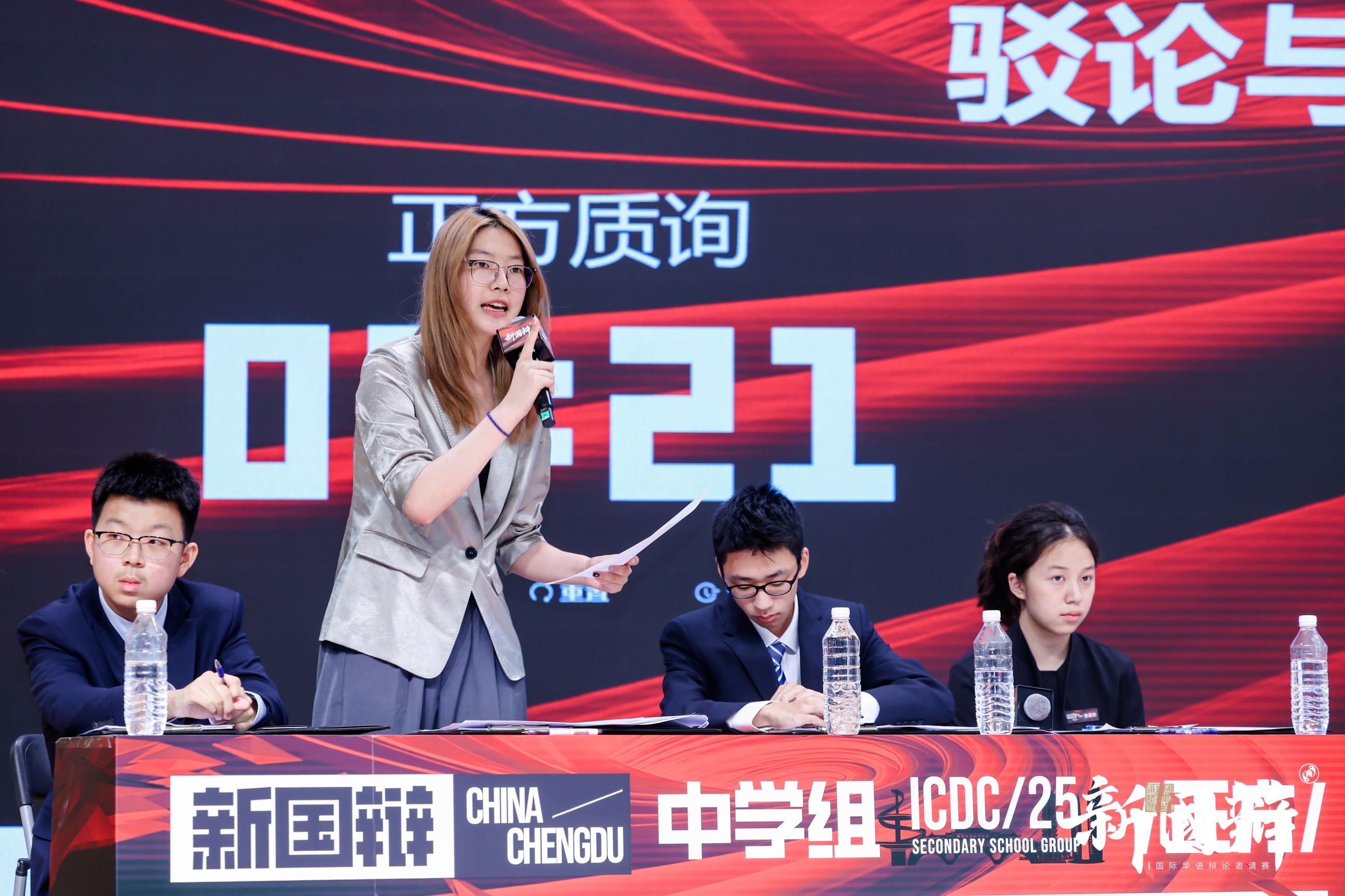
Debate competition
01 / Debate
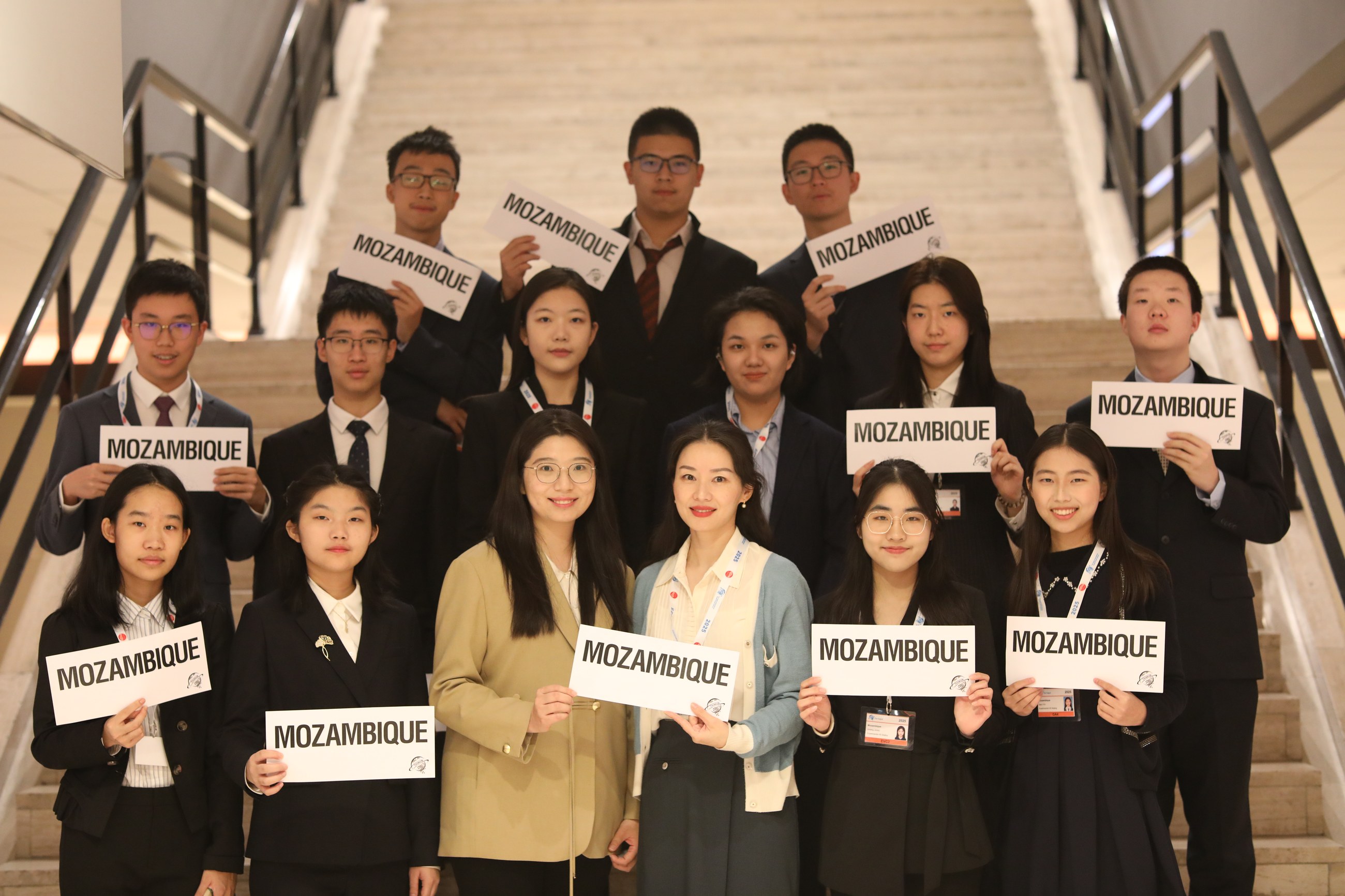
Model United Nations gathering
02 / Model United Nations
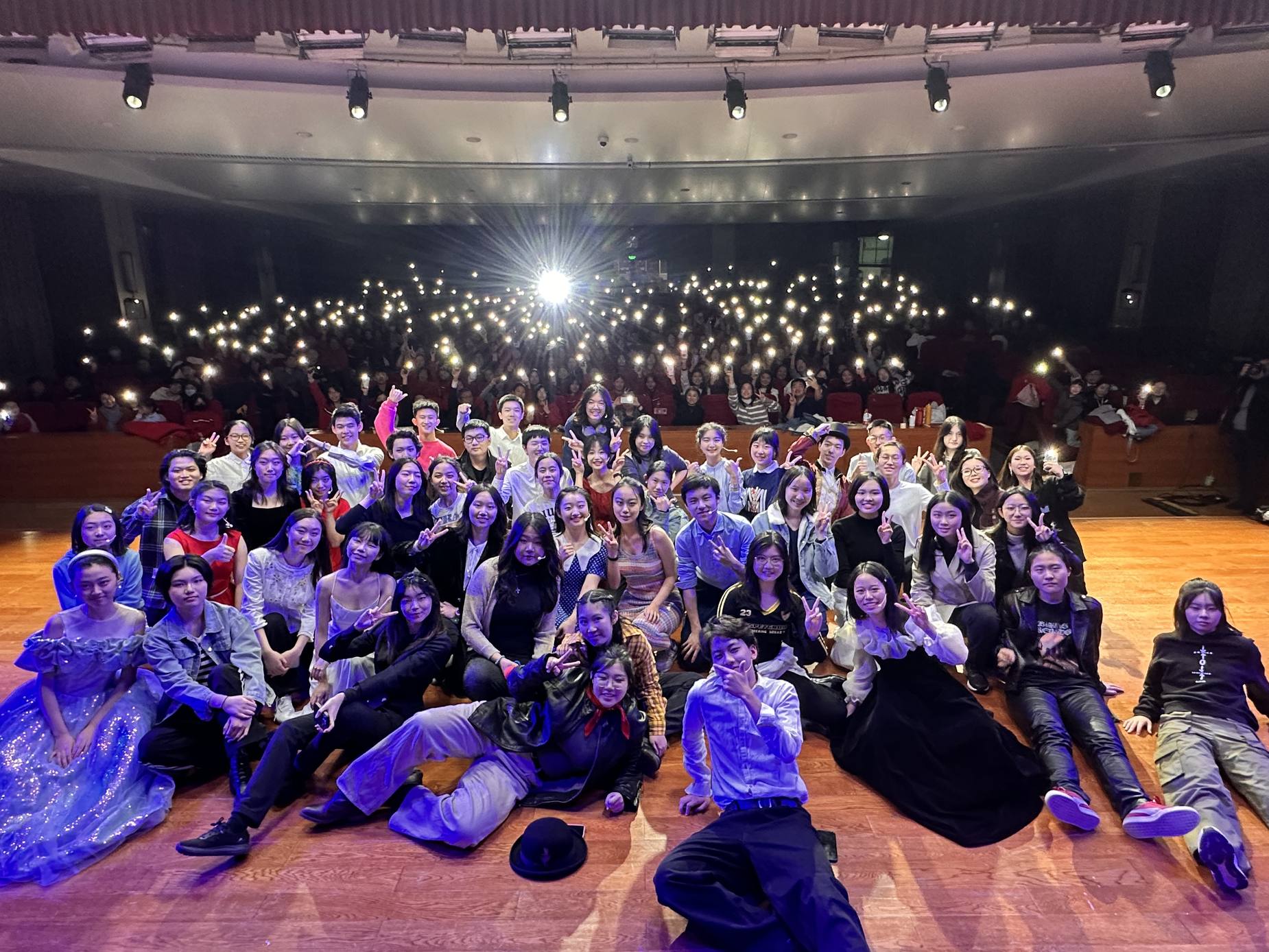
Musical theatre cast on stage
03 / Musical theatre
← BACK TO INDEX
FEATURED PROJECT / INTERACTIVE EXHIBITION

The Alchemical Kiln

Material transformation, sound, and spatial storytelling in a virtual wood-fired kiln.

ENTER THE INTERACTIVE WORK ↗
MEDIUMInteractive 3D exhibition / virtual space / sound
Built with Blender and New Art City
A wide view inside a virtual kiln with glowing flames and ceramic forms
01 / INSIDE THE KILN — AN IMMERSIVE ARCHITECTURAL SPACE

Overview

The Alchemical Kiln is an interactive online exhibition that brings the materiality of ceramics into an immersive 3D world. A virtual wood-fired kiln unfolds across six interconnected chambers, combining sculptural installations, spatial sound, and experimental narratives.

Visitors move through imagined stages of firing, encounter ceramics in transformation, and activate sounds through spatial interaction.

Vertical stacks of kiln furniture inside a red-lit chamber
02 / VIRTUAL ARCHITECTURE
Ceramic vessels presented within glowing openings in the kiln
03 / CERAMIC ENCOUNTERS

Research
& concept

Conventional museum displays often present porcelain as a finished object, organized by dynasty, kiln site, style, and aesthetic perfection. The project asks what happens when the processes behind that object become the focus.

Drawing on the idea of alchemical transmutation, the kiln is imagined as a place where clay, minerals, and metallic oxides undergo irreversible change through heat and shifting atmospheres — where human intention meets the agency of matter.

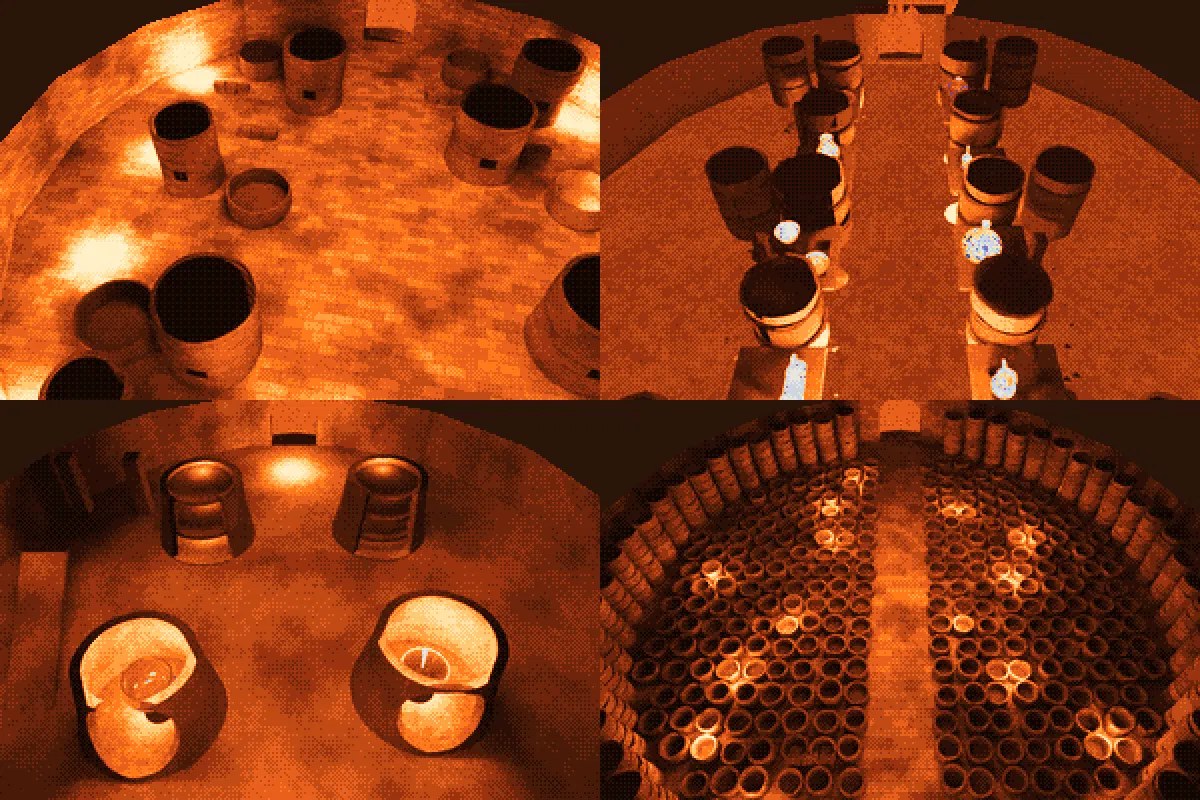
Four views of vessels and kiln chambers during firing
04 / CHAMBERS, HEAT, AND TRANSFORMATION
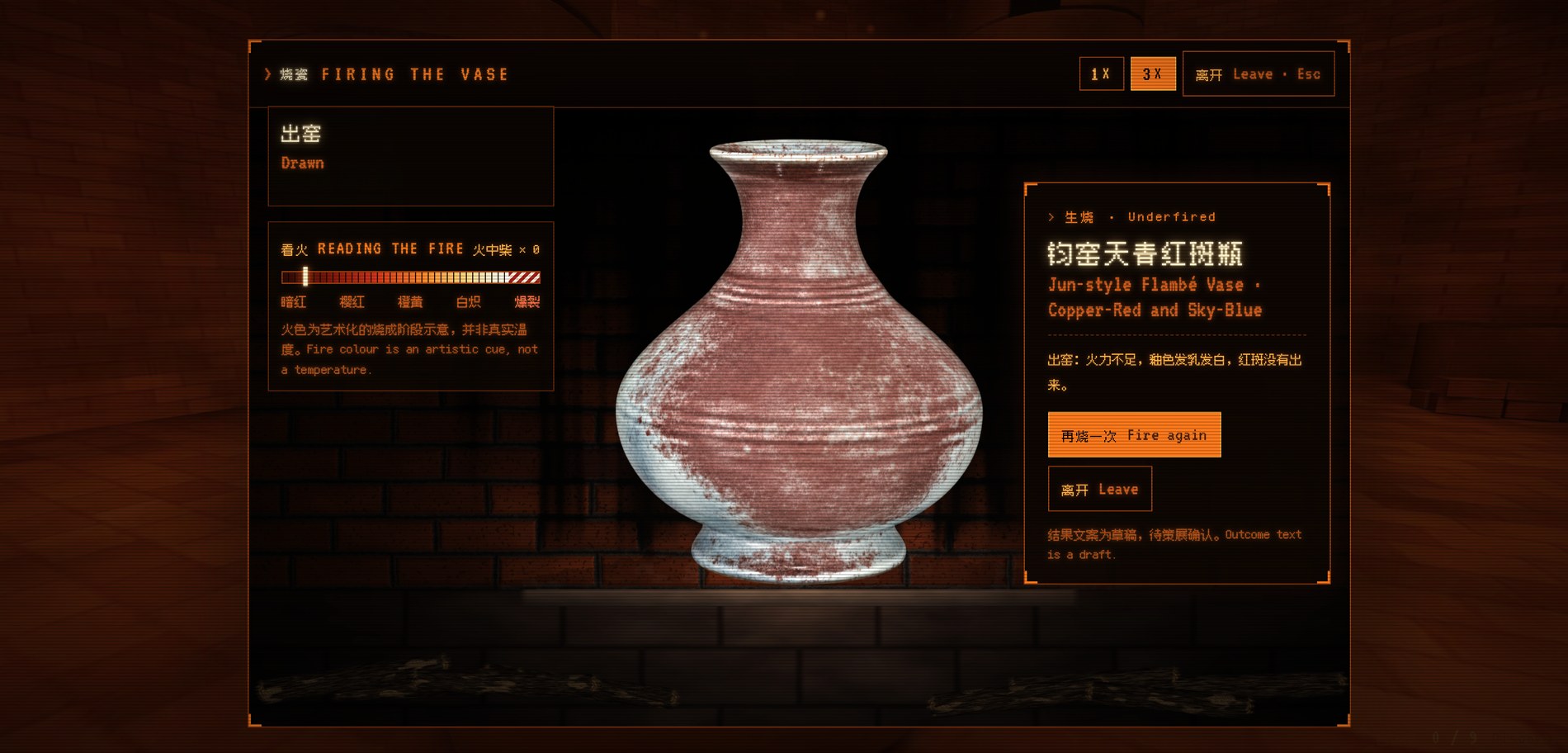
Interactive firing interface showing a ceramic vase
05 / INTERACTIVE FIRING EXPERIENCE

Spatial
narrative

The exhibition brings different moments in ceramic experimentation into one imagined architectural space. Historical techniques, shifting aesthetic values, fractures, and unexpected glaze formations coexist in the kiln.

Rather than presenting a single linear account, it invites visitors to encounter ceramics through movement, sound, and the material process of making.

Fire illuminates rows of kiln furniture in the virtual exhibition
06 / FIRE AND ATMOSPHERE
View through the vertical interior of a virtual kiln
07 / MOVING THROUGH THE SPACE
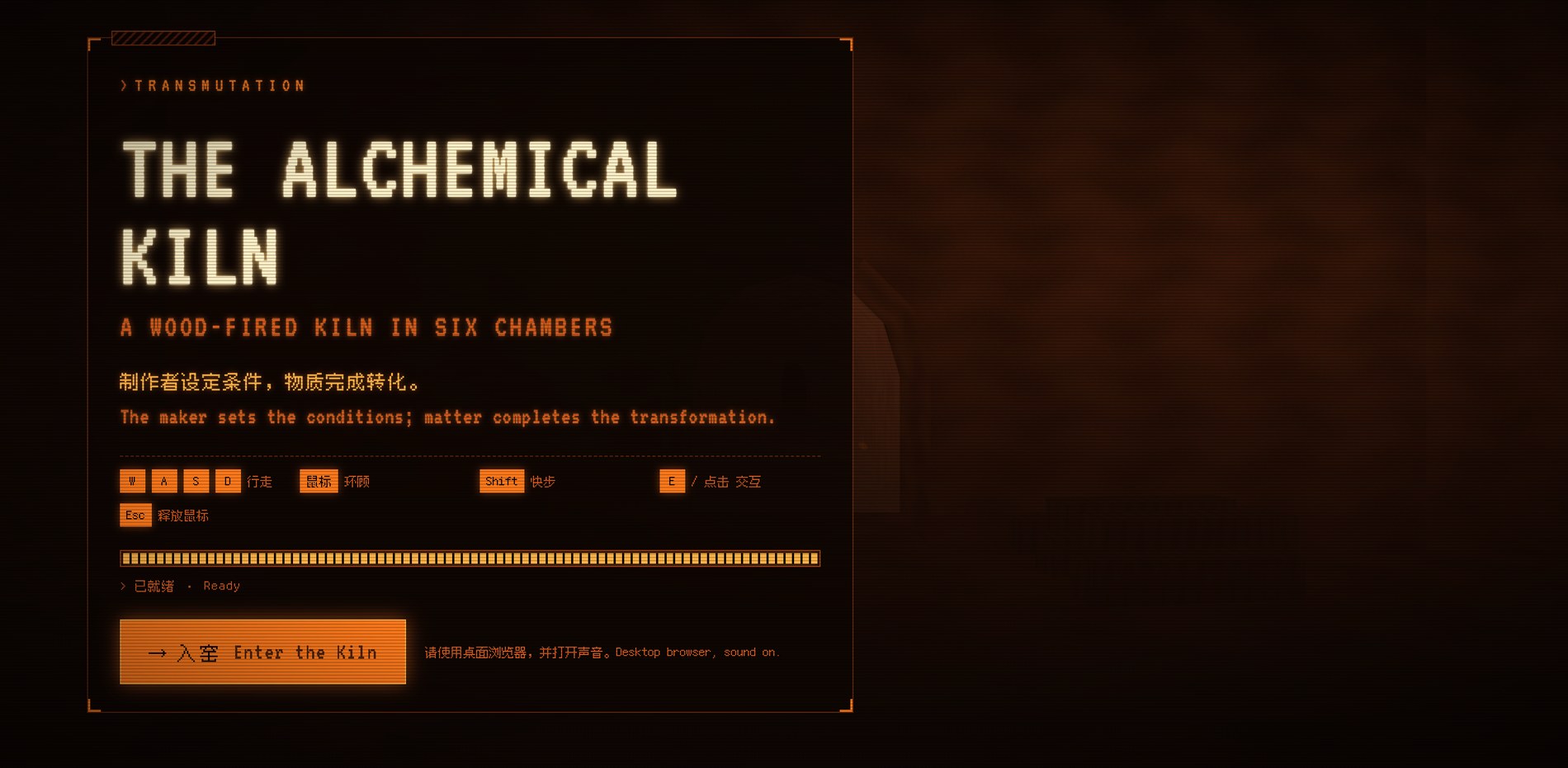
The Alchemical Kiln interactive exhibition opening screen
08 / INTERACTIVE WORK — OPENING SCREEN
← BACK TO INDEX
FIELDWORK / ANTHROPOLOGY · CULTURAL HERITAGE

Jiarong Tibetan
Fieldwork

Community, cultural memory, and questions of gender and tradition in Qiaoqi, Sichuan.

Context

In Qiaoqi, Baoxing County, Sichuan, Cindy’s fieldwork explored Jiarong Tibetan cultural traditions and community life. The materials describe conversations with local women and attention to the roles, music, and meanings surrounding wedding rituals.

A related community library project brought together local residents to discuss a shared space and cultural displays. Cindy participated in planning, construction, and book donations; the project also involved the documentation of local history and intangible cultural heritage.

A collection of colourful hand-painted objects
01 / OBJECTS FROM THE PROJECT MATERIALS

Research
questions

How do rituals and music carry memory across generations? Who performs, interprets, and makes decisions about these traditions? And how can cultural preservation be discussed alongside women’s agency and gender equity?

These questions connect the fieldwork and the research paper below. The paper develops the concept of “dynamic harmony” to consider continuity and change together.

RELATED RESEARCH / FULL TEXT

Ritual and Gender Harmony in Jiarong Tibetan Weddings

Music, Tradition, and Women’s Agency — an exploration of ritual, gender, cultural memory, and heritage.

READ THE PAPER ↗

Visual
archive

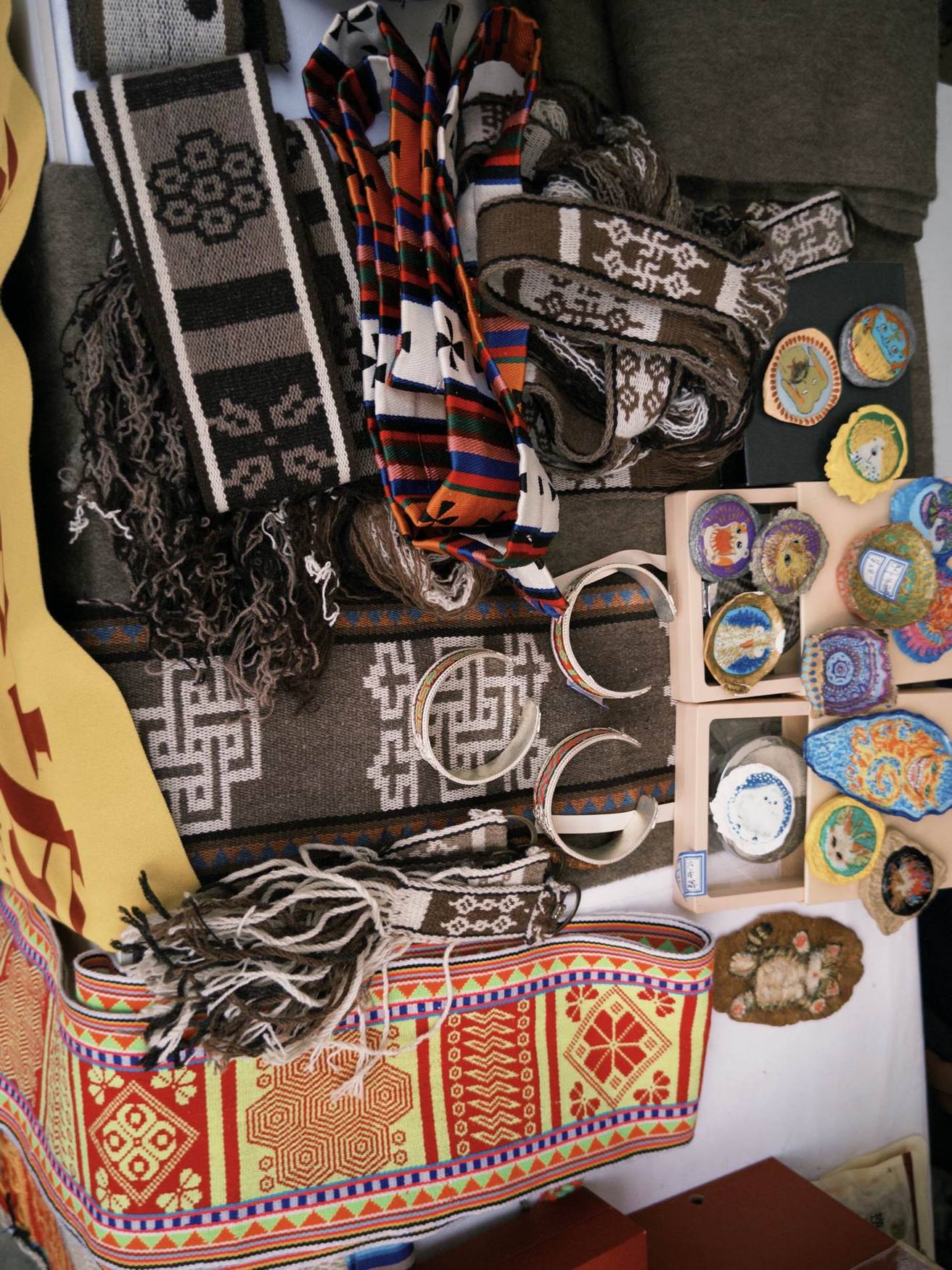
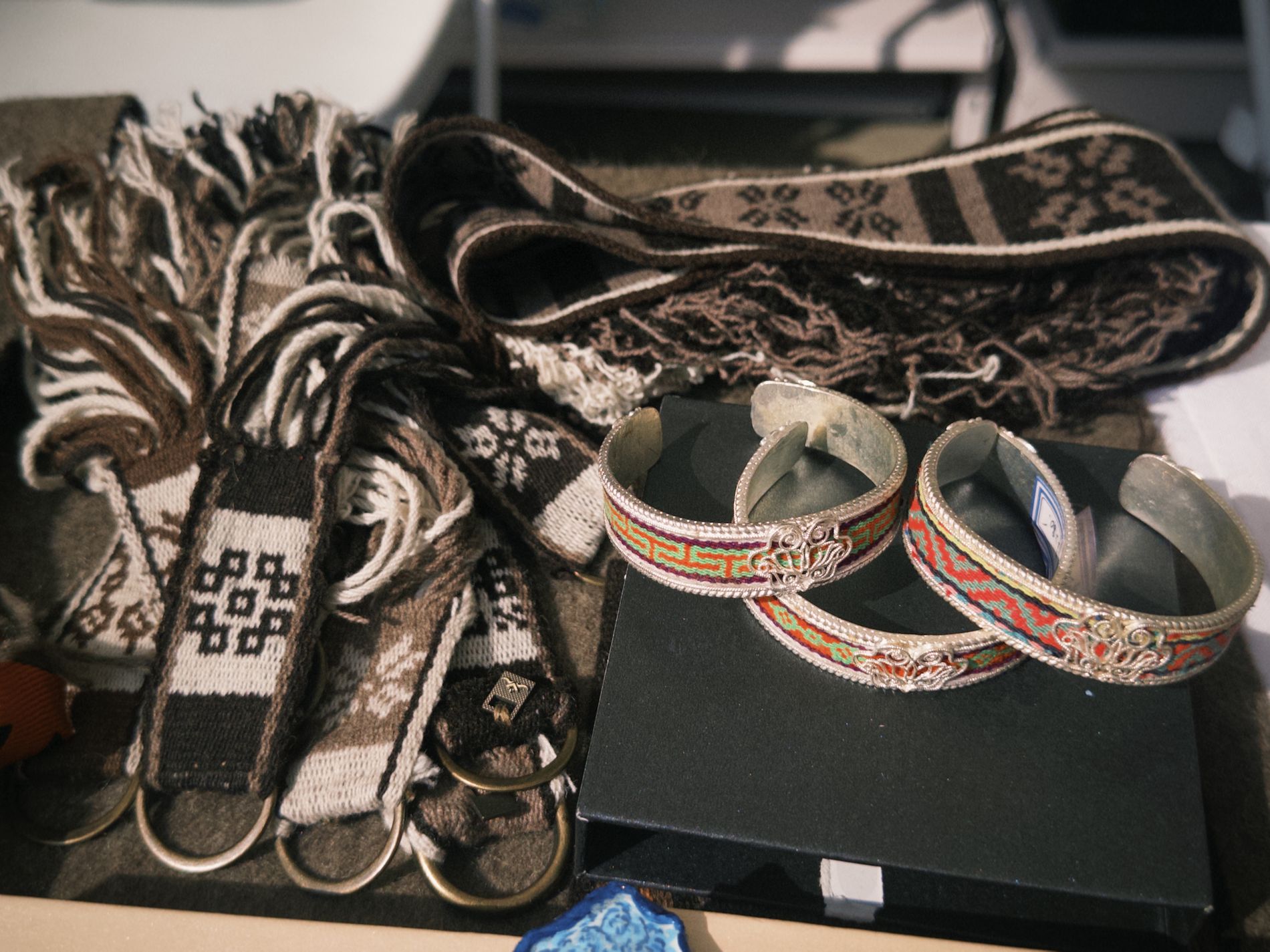
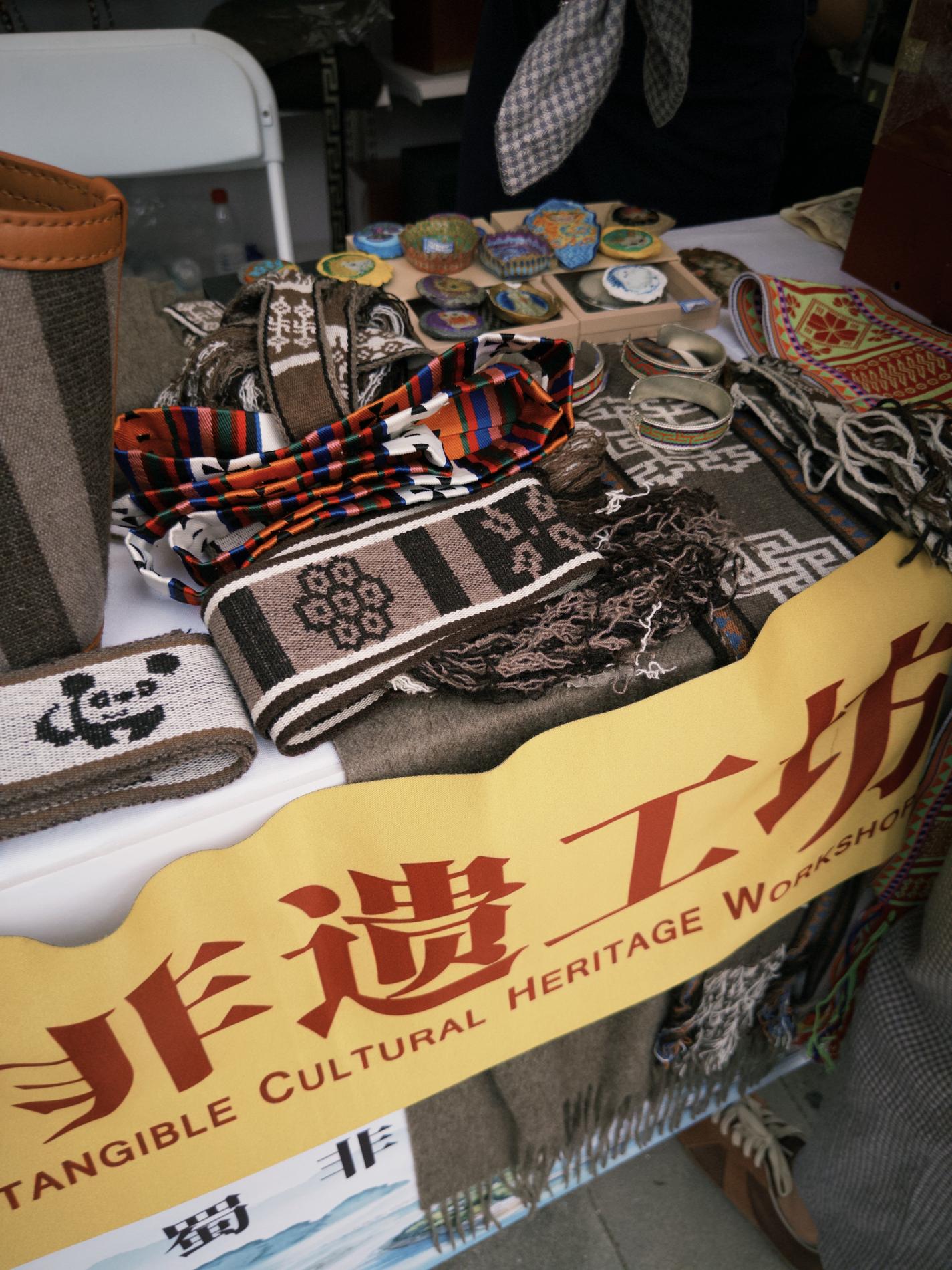
Images from the supplied fieldwork and Ditan market collection bring together people, objects, and moments around the wider project. Individual locations and dates are not identified here where the source material does not specify them.

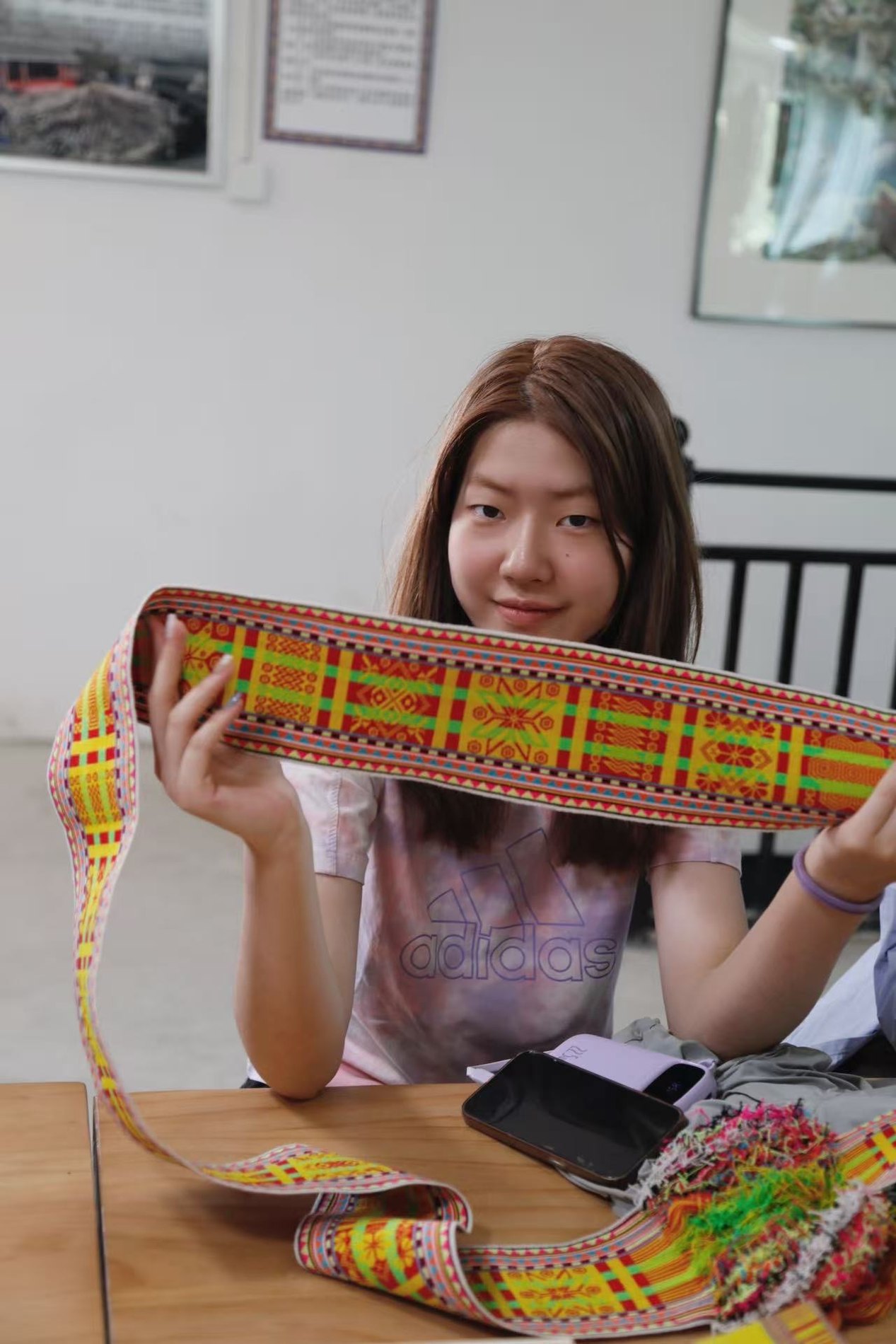
A person holding a colourful object
02 / PEOPLE AND OBJECTS
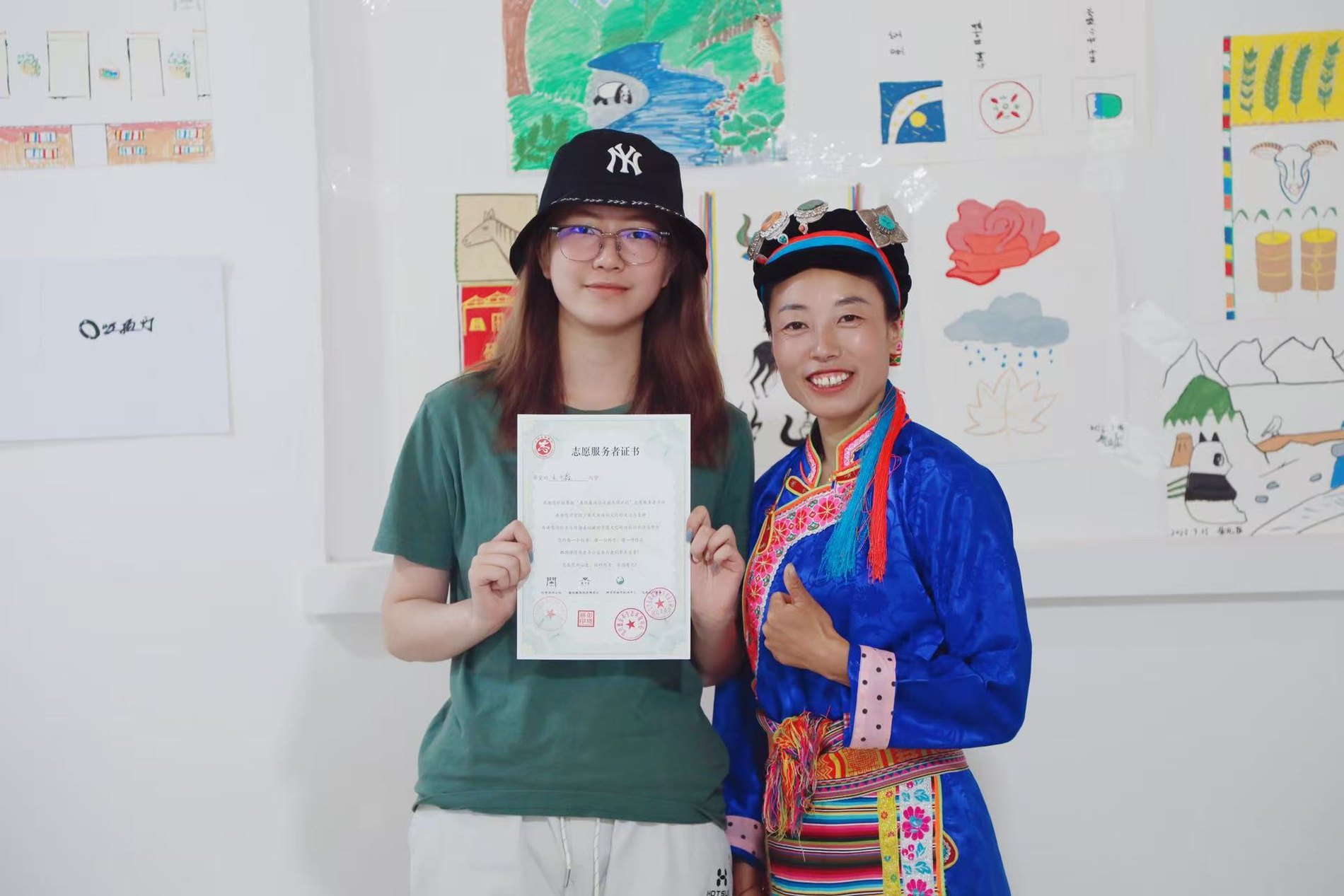
Two people holding materials at an event
03 / SHARED MOMENTS
Colourful handmade objects displayed together
04 / OBJECTS AND MATERIAL CULTURE
Craft objects and textiles on display
05 / DETAIL FROM THE MATERIALS
A close view of crafted objects
06 / DETAIL FROM THE MATERIALS
Objects arranged for display
07 / OBJECTS IN CONTEXT
← RELATED FIELDWORK
02 / ANTHROPOLOGY · MUSIC · GENDER

Ritual and Gender Harmony in Jiarong Tibetan Weddings

Music, Tradition, and Women’s Agency

OVERVIEW

Through Jiarong Tibetan wedding traditions, this paper examines music, cultural memory, women’s agency, and heritage. It proposes “dynamic harmony” as a framework for considering cultural continuity alongside gender equity.

FULL TEXT

Ritual and Gender Harmony in Jiarong Tibetan Weddings: Music, Tradition, and Women’s Agency

Cindy Zixin Wang

Abstract

The article analyzes the wedding traditions of Jiarong Tibetans as a focus point of the intertwining of rituals, music, gender, and cultural heritage maintenance in a new concept of dynamic harmony. The study rejects presenting the wedding ceremony as a cultural tradition frozen in time without any development or a patriarchal entity without mentioning the particularities of social processes and development in this event. The concept of dynamic harmony implies that there is still a space for the intersection between traditions and modernization, women’s roles, and cultural development expressed through various practices of performing the wedding ceremony. The study combines the theory of rites of passage with concepts of the ritualization process, gendering ethnomusicology, and gender performance within the context of the discourse on the Sino-Tibetan border. For example, Guozhuang circle dancing and antiphonal singing can serve as a method of memory transmission, while a form of family exchange may lead to the reinforcement of the patriarchal order. The author of the article, therefore, pays special attention to the methods of cultural heritage maintenance in order to pave the way for women’s empowerment in the process.

Keywords: Jiarong Tibetan; wedding ritual; guozhuang; ethnomusicology; gender harmony; dynamic harmony; cultural heritage

1. Introduction

Among all types of collective ceremonies, marriage rites are among the most complex in terms of organization due to connecting individual transition with family values, religion, property, memory, and performance. Jiarong Tibetan communities, covering the majority part of today's western Sichuan regions (notably in Aba and Ganzi Prefectures), have unique identities developed through rich interactions within the Sino-Tibetan area (Kolås & Thowsen, 2005; Jinba, 2013; Gros, 2019; Li et al., 2024). Published studies indicate that Jiarong ceremonies are performed with correlations with Tibetan Buddhist practices, Bon practices, gift exchange, circle dance, and antiphonal singing. However, these elements should not be seen as permanent and constant as they change due to migration, state policy, tourism, and generation transfer.

The paper raises two crucial issues. How can we interpret major ritual and musical elements of Jiarong weddings through the lens of ritual studies and ethnomusicology? How can gender equality be ensured without treating culture protecting as preserving all forms of social relationships known from the past? These issues are important for anthropology, gender studies, musical studies, Tibetan studies, and heritage studies, as public expressions of minority culture can help to stabilize certain practices that are not settled fully by locals themselves. Studies in the area of tourism in borderlands show how cultural visibility, economic development, and recognition from the state affect local identity or culture (Yeh & Coggins, 2014; Zhu, 2018).

Originality of the article is based on the idea of dynamic harmony. This idea creates a difference between cultural phenomenon (for example, a dance, genre of songs, ceremonial act, or ritual phrase) and the potential power and material consequences of this phenomenon. As the result, harmony is considered from the perspective of an evolving ethical relation, but not as a point of view that ritual order and gender equality coincide. The framework has four issues to discuss: which forms are capable of preserving valued memory; who allows interpretation and realization of forms; what gender consequences are involved in the performance; are participants able to contest these consequences.

This line of reasoning continues into five additional portions. The theoretical, evidential, and ethical context is described in section 2. Section 3 discusses the wedding process both as a rite of passage and a musical-social phenomenon. Section 4 discusses the coexistence of the institution of kinship exchange and women’s agency as the performers. Section 5 covers dynamic harmony as the approach to protection that is responsive to gender issues. Finally, Section 6 sums up achievements and limitations of the study.

2. Theoretical and Methodological Framework

2.1 Weddings as Social Transformation

Van Gennep’s (1960) tripartite scheme suggests a three-stage manner of rites of passage consisting of the separation phase, transition phase (or liminality), and incorporation phase. A bride’s departure from her family, her ambiguous status during the wedding ceremony, and her reception into another family can be explained within the boundaries of this theory. Turner (1969) focuses on liminality and communitas as the situations of enhanced social bonding. Bell (1997) developed the notion of ritualization which implies that the attention should be drawn not only to the meaning of the ritual's particular actions but also to the ways some actions are differentiated from others formally. In more recent works the researchers argue against using only traditional symbolical measurements of the community; ritual is not only an idea; it is also the idea that has been transferred into reality. Socialeffect can be achieved through rituals that seem to have standard meanings, thus the analysis of the modern wedding requires one to embrace the idea of the presence of both traditional and altered meanings of the ritual.

The components of the model have different significance degrees and should not be integrated into one model. In this regard, van Gennep indicates the stages of the process that involves changes of status. Turner concentrates on the experiences obtained through the process, while Bell claims that some rites become authoritative compared to others. Therefore, the model developed by Van Genepp helps identify the ceremonial outline, while the research conducted by Turner makes it possible to study social consequences connected to any rite. Weddings help brides become part of families, but they often bring no clarity in regard to real estate and place of residence. At the same time, ritual events may provide participants with fresh perspectives towards their positions.

2.2 Music as a Social Action with a Defined Pattern

Merriam (1964) connects musical sound, ideas about music, and behavior in connection with the performance. Thus, music is not merely background but social action with a definite arrangement. Similar to Merriam, Blacking (1973) suggests that music may acquire sense only due to social relations that shaped different music forms. Scheidegger (1988) presents the data about Tibetan ritual music, thus providing a regional comparison, but it should not be interpreted as an unbiased description of all Jiarong wedding music genres. Modern ethnomusicology pays attention to such issues as inequality of access, power, and ethical problems. It also raises such important questions as who is heard and who is authorized to interpret the performance (Koskoff, 2014; Appert & Lawrence, 2020; Werner et al., 2020).

Performance-centered approach eliminates the possibility to equate participation and equality. Both men and women may be present at the circle together, but it does not mean that both genders have the same freedom to start a song, choose a text, or improvise the performance. Musical authority may be divided into different tasks: a person who started the melody, the singer in charge of improvisation, the elder who gives the green light to a certain repertoire, a person organizing the performance, and an organization that registers or sells the rite. Although some functions may overlap, they should be analyzed individually. Listening is also political, as it decides which voice is funny, authoritative, embarrassing, sacred, or attractive. Therefore, an ethnomusicological study must go beyond the simple description of musical styles and give an insight into how music organizes the attention.

2.3 Gender and Kinship: Exchange, Performativity, AgencyLooking at Ortner (1974), gender and kinship are analyzed separately as recurrent symbolic relations between the image of women, nature, and home as well as Rubin’s (1975) interpretation of the exchange of women as a political and economic process. Gender in Butler’s (1990) account is no longer a fixed quality but turns out to be the result of repeated performances. The combination of these theoretical frameworks allows two interpretations of weddings to emerge: the material economy behind weddings and the embodied performance of gender. The study of Moso families by Shih (2009) serves as a similar case but does not create one alternative region for comparison with Jiarong practices. The point of comparison consists in destabilizing the idea of the naturalness of these practices rather than their complete identification.

The definition of agency should also be specified and not understood in opposition to subordination. Agency can be interpreted through the lenses of different types – expressive (for example, the singer attracts people by the ability to sing), procedural (the elder knows what should be performed first), interpretive (the woman explains the meaning of the song), economic (the performer is able to obtain compensation for the performance), and institutional (the practitioner has power over archives, heritage, or school programs). Each of these forms of agency allows for its own acquisition of force, in other words, being strong in one area does not mean being strong in another area. For example, a well-known singer can have no authority in properties or residence matters, while a woman may have power at home, but no public recognition as an expert in culture. Dynamic equilibrium needs attention to these multiple domains since performance can coexist with the absence of material power.

2.4 Tibetan Studies and Sino-Tibetan Borderlands

Jiarong communities should not be understood as a stereotype of one Tibet. The borderland studies show the existence of many layers obtained due to different events in history, in other words, at the borderlands, language and religion changed along with the ethnic identifiers of the people (Kolås & Thowsen 2005; Wang 2008, 2020; Jinba 2013; Ye & Coggins 2014; Gros 2019). Recent attempts to define space in relation to Jiarong culture also show that the modern states may not represent administrative boundaries of the Jiarong cultural space, which points to the necessity of approaching the concept of weddings from a processual perspective and understanding that weddings today are neither an archive representation of history nor a recent creation.

2.5 Limits, Research Basis, and Moral Position

Unlike a systematic review which offers complete overview of the issue, this article implements critical selective review method. The evidence used in this review is a combination of (1) classical and contemporary studies of ritual, music, gender, and heritage; (2) ethnographic and historical studies of Gyalrong/Jiarong and Sino Tibetan borderlands; and (3) audiovisual records of CNRS Pangloss Rgyalrong (Qiaoqi) corpus including wedding stories, songs, and a described first wedding dance. All this material indicates that wedding speeches, songs and dances happen as a documented practice, however what cannot be claimed is that each local tradition or interpretation is universal in its character. Therefore, those assumptions with no direct Jiarong sources are treated like possibilities or regional parallels rather than truths about Jiarong people.

The study makes no new recordings or observations, thus opening the way for ethical approval. However, this area of concern is still important to mention. The article does not pretend to be speaking on behalf of all Jiarong people, it differentiates direct evidence from regional comparisons and treats opinions as ideas to be verified by members of the community. Any future empirical phase will need ethical approval prior to recruitment stage as well as consider the issues of informed consent, translation and ownership of data, recording and publication of results, including local women performers and ritual specialists into the process of interpretation.

The hierarchy of sources has also affected the degree of validity of the conclusions. Documented wedding performances give direct evidence of their occurrence but do not show how they were perceived by their participants. Geo ethnographies bring much more interesting stories regarding identity, tourism, and social changes; however, the results are not automatically applicable to all the Jiarong-speaking community. Theories provide tools for analytical understanding of practices but do not bring evidence. Therefore, the language used in the article is modal indicating uncertainty with the process of turning documented practices into interpretations which makes sense, thus being intentional.

The Jiarong Wedding seen as Ritual and Musical Expression

Separation, Transition, and Incorporation

The storytelling elements in wedding processions and other wedding-related cultural materials documented in the CNRS Pangloss Rgyalrong (Qiaoqi) corpus can be examined through Van Gennep’s framework. Preparatory activities, as well as departure from a location, might indicate separation. Movement from one household to another is indicative of liminality. Reception, celebration, or recognition might represent incorporation. Such comparisons are far from claiming that all Jiarong communities observe identical processes and practices. The concept of ritualization introduced by Bell points out that one should focus on determining who has the authoritarian voice in this context, while Grimes (2014) proposes an analysis of space and objects where performance takes place in addition to symbolism.

Guozhuang and the Sound Articulation of the Wedding

Dance and song can constitute an effective approach to understanding the matter of sound signaling participation. The CNRS Pangloss Rgyalrong (Qiaoqi) corpus mentions Boyegeyegela as the first folk dance in the wedding ceremony, which includes explanations for the ceremony and music materials. This archival evidence confirms that song and dance were performed together in the Qiaoqi area, but this does not prove a universal repertoire or justify the claim about the uniformity of the term guozhuang across all communities. Therefore, solemn and light-hearted performances of the Tibetan people may serve as references and not the inflexible way of categorizing Jiarong music.

Traditional circle dance involves some aspects of listening that are proved using Merriam’s definitions of musical meaning as a combination of sound, cultural understanding and behavior. Blacking points out that the arrangement of music performances provides insights into the social organization of the group. However, the circular pattern should not be automatically interpreted as social equality. What matters in this case is the understanding of who starts the songs, whose repertoire is known, who is allowed to improvise, whose voice is recorded, and who interprets the tradition after the wedding practice. All these issues link the music analysis with gender question (Koskoff, 2014; Werner et al, 2020).

To summarize, music analysis should consider five aspects. First, the temporal organization relates to the questions of the time of starting the song and duration of exchanges. Second, spatial organization is concerned with determining who is at the center of the circle, how male and female performers are arranged, and whether mobility is allowed. Third, vocal organization involves the understanding of who leads, who responds, and how different tones are interpreted. Fourth, textual organization suggests whether the lyrics contain praises, advice, grief, jokes, memory of ancestors and thoughts about marriage. Fifth, circulation points out who records, edits, uploads, teaches, or sells.

3.3 The gender-based Roles in Rituals: Participants, Elders and Exchange

Narratives describing women’s preparations and life-cycle rituals make the picture of a bride too simple. Women who are elders can pass down knowledge about the clothing and its wearing, the songs and ceremonial principles and thus show a kind of authority that does not limit to political leadership. Of course, knowledge about rituals alone would not help women overcome inequalities. If we assume that marriages are arranged in a way when bride price or dowry appear to transfer women’s reproductive and domestic roles through the generations, we can say that Rubin’s idea of women being objects still holds true. This means that weddings often demonstrate both actions of women, but unequal relatives. One cannot say that subordination and agency exist at the same time or are based on the same principle.

4. Gender, Tradition, and the Politics of Contemporary Change

4.1 The Wedding as Exchange and Performance

Using ideas of Rubin and Butler, we can understand that in our situation we cannot say that a wedding is just another example of oppression or freedom. The transfers of household property, the residence requirements and certain obligations make marriages work through the differences based on gender. At the same time, the use of clothes, gestures, songs, and the role of women can demonstrate to the audience that women are not only participants of a festival, but also show such concepts as bride, mother, singer, etc. One of the challenges here would be to differentiate between position and the ability to do something: a certain form of appearance does not mean that a person would be able to exert power.

4.2 Song as a Situated Form of Women’s Agency

Antiphonal singing can provide local forms of women’s agency as these songs help women demonstrate natural musical ability, memory, verbal skills, cosmological knowledge, and become the animators of the event. At the same time, we should note that it is relational and needs conventions within the society. Turner’s communitas theory is great to illustrate the fact that sometimes hierarchy is not respected by everyone, but freedom should not be understood as equality. An important question we should ask here is whether the status obtained from a wedding performance has any meaning for women in later situations when they teach, participate in the heritage committee, take part in cultural activities at home, and record the songs.

In interpreting harmony, it is crucial to distinguish between fleeting voice and lasting authority. A performance may leave a strong sense of reciprocity through the alternating performances of women and men in song or their simultaneous movements, but the effects of the reciprocal act may stop after the end of the ritual. Evidence of lasting change includes women deciding on their repertoire, teaching young performers, controlling the reuse of the recordings, receiving remuneration, and being involved in the decisions about heritage. At the same time, women may see value in the roles of the ceremony that may appear restrictive to an observer.

As a result, analysis should involve the mixing of evidence about power exercised with individuals’ own evaluations.Dynamic harmony is most effective if it includes recognition, material rights, and interpretive authority, but it is weakest when women are celebrated symbolically in the cultural performance, while being excluded from decisions about how culture is represented and who benefits from it.

4.3 Heritage, Tourism, and Gender Equity

Cultural sustainability and tourism can contribute to the creation of possibilities for transmission and signify them through the selection of picturesque, commercially successful, or bureaucratically clear manifestation of culture. Borderland studies point out that constructions are not neutral recording of the traditions, but are rather participating in the politics of identity (Jinba, 2013; Yeh & Coggins, 2014; Gros, 2019). The same applies for heritage studies that also warn that the authority of narratives can privilege institutions and experts over practitioners (Smith, 2006; Shepherd & Yu, 2013; Zhu, 2018). Thus, gender equity requires not only the counting of women performing, but also the analysis of the power over repertoire, payment, traveling, representing, recording, and deciding what can be transmitted.

5. Dynamic Harmony: Gender Considerate Preservation Framework

Dynamic harmony is an evolving relationship where community keeps cherished rituals while authority, participation and social outcomes keep changing. Unlike the idealized view of harmony that might hide the disagreements, dynamic harmony recognizes that dissent is part of culture. The framework consists of four dimensions: form, authority, outcome, and process. The first dimension refers to the definition and understanding of the songs, dances, things, many elements of certain performances. The second dimension refers to teachers, interpreters, performers and those who record the performance. The third dimension refers to the effects of the performance regarding the place of residence, property, job, movement and physical autonomy of people. The fourth dimension refers to whether change is a result of inclusive, knowledgeable, and revisable community participation.

As a result, each dimension can translate into more practical indicators for researching and preserving the cultural context. For the dimension of form, it is important to understand through research what elements are important for practitioners and what already differs between villages, families, and generations. The dimension of authority concerns not only how many women are there, but also who is leading the process, being a teacher and interpreter. The dimension of the outcome considers the connections of the activities with proceedings in everyday life concerning labor, property, income, mobility. The dimension of process means that participating people should be able to express their disagreement without being labeled as hostile to tradition. Thus, dynamic harmony does not provide evidence of its presence, meaning that a cultural process needs to be followed according to the determining factors of its presence.

5.2 Heritage, Tourism, and Gender Equity

Cultural sustainability and tourism can contribute to the creation of possibilities for transmission and signify them through the selection of picturesque, commercially successful, or bureaucratically clear manifestation of culture. Borderland studies point out that constructions are not neutral recording of the traditions, but are rather participating in the politics of identity (Jinba, 2013; Yeh & Coggins, 2014; Gros, 2019). The same applies for heritage studies that also warn that the authority of narratives can privilege institutions and experts over practitioners (Smith, 2006; Shepherd & Yu, 2013; Zhu, 2018). Thus, gender equity requires not only the counting of women performing, but also the analysis of the power over repertoire, payment, traveling, representing, recording, and deciding what can be transmitted.

5.3 Dynamic Harmony: Gender Considerate Preservation Framework

Dynamic harmony is an evolving relationship where community keeps cherished rituals while authority, participation and social outcomes keep changing. Unlike the idealized view of harmony that might hide the disagreements, dynamic harmony recognizes that dissent is part of culture. The framework consists of four dimensions: form, authority, outcome, and process. The first dimension refers to the definition and understanding of the songs, dances, things, many elements of certain performances. The second dimension refers to teachers, interpreters, performers and those who record the performance. The third dimension refers to the effects of the performance regarding the place of residence, property, job, movement and physical autonomy of people. The fourth dimension refers to whether change is a result of inclusive, knowledgeable, and revisable community participation.

As a result, each dimension can translate into more practical indicators for researching and preserving the cultural context. For the dimension of form, it is important to understand through research what elements are important for practitioners and what already differs between villages, families, and generations. The dimension of authority concerns not only how many women are there, but also who is leading the process, being a teacher and interpreter. The dimension of the outcome considers the connections of the activities with proceedings in everyday life concerning labor, property, income, mobility. The dimension of process means that participating people should be able to express their disagreement without being labeled as hostile to tradition. Thus, dynamic harmony does not provide evidence of its presence, meaning that a cultural process needs to be followed according to the determining factors of its presence.

This framework has much practical applicability to Jiarong weddings. Documentation and safeguarding initiatives should be jointly created and led by women singers, elder women, brides, and younger women when feasible, instead of relying exclusively on male religious or administrative figures. In keeping with archival principles, records must indicate who is performing something and specify what and how one gets permission to have access to something in the future. Public cultural initiatives should address women’s expertise and establish links between having participated in rituals and acting in the capacity of teachers and curators. Families and communities can keep guozhuang, antiphonal singing, blessings, and exchanges, albeit modifying the practices in terms of language or some other aspects that connote the bride’s ownership not forgetting about local discussion of this issue.

The framework also prevents glorification of agency. Making women present in performances is not enough if nothing is done in regard to such issues as patrilocality, unequal ownership of properties, unpaid work in the cultural field, and mercantile control over recordings in the same manner. In contrast, legal or political changes that fail to take musical awareness and ritual authority into consideration can alienate the practitioners and hamper the transmission. Thus, dynamic harmony evaluates both cultural persistence and gender justice issues, without assuming that harmony exists already or that lack of agreement equals failure.

A safeguarding initiative based on the framework would be collaborative in nature. During mapping, in addition to all the female performers, men would have to be involved as well as senior family members, specialists in given rituals, and local culture representatives. The second step would entail documentation, that is indicating where something comes from, how and to whom it should be attributed, as well as stating consent for future access to the recording. The next stage would focus on interpretation in which different stakeholders would have to state where they consider continuity, tension or change to be present instead of sticking to only one final account. Finally, during the review stage it would be possible to modify procedures according to the changes in conditions.

6. Conclusion

Jiarong Tibetan weddings can be interpreted as rites of passage whose social force is organized through movement, exchange, dance, song, and public recognition. Classical ritual theory illuminates separation, liminality, incorporation, and ritualization; ethnomusicology reveals music as patterned social action; gender and kinship theory identifies the coexistence of women’s performative competence with potentially unequal household relations; and borderland and heritage scholarship situates the wedding within continuing political, economic, and representational change.

The article’s principal contribution is the framework of dynamic harmony. It shifts the debate from whether tradition should be preserved or rejected to the more precise questions of which forms are valued, who controls them, what consequences they produce, and how practices change over time. Ritual and gender harmony, on this account, does not mean suppressing contradiction; it describes an evolving relationship in which cultural continuity, women’s ritual and musical authority, and gender justice can interact and be revised. This framework supports gender-responsive safeguarding in which women are not simply visible performers but authoritative interpreters, teachers, decision-makers, and rights-bearing participants. Because the present analysis is based on published and archived sources and because direct ethnographic evidence on locally diverse Jiarong wedding practices remains limited, these conclusions should be treated as a theoretically grounded agenda rather than a definitive account. Future research should compare communities, generations, and performance contexts through ethically approved, collaborative fieldwork.

A future empirical test of the framework should combine event-centered observation with life-history interviews and follow-up beyond the wedding itself. Researchers could compare how brides, grooms, female elders, male ritual authorities, singers, and younger spectators interpret the same performance; trace whether musical prestige affects later teaching or decision-making; and examine how recordings circulate through tourism, schools, social media, and family archives. Comparison across localities would clarify which practices are widely shared and which are specific to particular communities. Most importantly, locally based researchers and practitioners should participate in defining the questions and evaluating the conclusions. Only such collaborative evidence can determine whether dynamic harmony accurately describes community priorities or remains an external analytical proposal.

References

American Anthropological Association. (2012). Principles of professional responsibility. American Anthropological Association.

Appert, C. M., & Lawrence, S. (2020). Ethnomusicology beyond #MeToo: Listening for the violences of the field. Ethnomusicology, 64(2), 225–253. https://doi.org/10.5406/ethnomusicology.64.2.0225

Bell, C. (1997). Ritual: Perspectives and dimensions. Oxford University Press.

Blacking, J. (1973). How musical is man? University of Washington Press.

Burnett, D. (2014). Rgyalrong conservation and change: Social change on the margins of Tibet. Lulu Publishing Services.

Butler, J. (1990). Gender trouble: Feminism and the subversion of identity. Routledge.

Galliot, S. (2015). Ritual efficacy in the making. Journal of Material Culture, 20(2), 101–121. https://doi.org/10.1177/1359183515578248

Grimes, R. L. (2014). The craft of ritual studies. Oxford University Press. https://doi.org/10.1093/acprof:oso/9780195301427.001.0001

Gros, S. (Ed.). (2019). Frontier Tibet: Patterns of change in the Sino-Tibetan borderlands. Amsterdam University Press. https://doi.org/10.5117/9789463728713

Centre national de la recherche scientifique. (n.d.). Rgyalrong (Qiaoqi) corpus. Pangloss Collection. https://pangloss.cnrs.fr/corpus/Rgyalrong_%28Qiaoqi%29

Jinba, T. (2013). In the land of the eastern queendom: The politics of gender and ethnicity on the Sino-Tibetan border. University of Washington Press. https://doi.org/10.6069/9780295804842

Kolås, Å., & Thowsen, M. P. (2005). On the margins of Tibet: Cultural survival on the Sino-Tibetan frontier. University of Washington Press.

Koskoff, E. (2014). A feminist ethnomusicology: Writings on music and gender. University of Illinois Press. https://doi.org/10.5406/j.ctt7zw5tj

Li, Y., Fan, W., Yuan, X., et al. (2024). Spatial distribution characteristics and influencing factors of traditional villages based on geodetector: Jiarong Tibetan in Western Sichuan, China. Scientific Reports, 14, 11700. https://doi.org/10.1038/s41598-024-62666-z

Merriam, A. P. (1964). The anthropology of music. Northwestern University Press.

Ortner, S. B. (1974). Is female to male as nature is to culture? In M. Z. Rosaldo & L. Lamphere (Eds.), Woman, culture, and society (pp. 67–87). Stanford University Press.

Rubin, G. (1975). The traffic in women: Notes on the ‘political economy’ of sex. In R. R. Reiter (Ed.), Toward an anthropology of women (pp. 157–210). Monthly Review Press.

Scheidegger, D. A. (1988). Tibetan ritual music: A general survey with special reference to the Mindroling tradition. Tibet-Institut.

Shepherd, R. J., & Yu, L. (2013). Heritage management, tourism, and governance in China: Managing the past to serve the present. Springer. https://doi.org/10.1007/978-1-4614-5918-7

Shih, C.-K. (2009). Quest for harmony: The Moso traditions of sexual union and family life. Stanford University Press.

Smith, L. (2006). Uses of heritage. Routledge. https://doi.org/10.4324/9780203602263

Society for Ethnomusicology. (2018). Position statement on ethics. Society for Ethnomusicology.

Turner, V. (1969). The ritual process: Structure and anti-structure. Aldine.

Van Gennep, A. (1960). The rites of passage (M. B. Vizedom & G. L. Caffee, Trans.). University of Chicago Press.

Wang, M. (2008). Qiang zai Han Zang zhijian: Yige Huaxia bianyuan de lishi renleixue yanjiu [The Qiang between Han and Tibetan: A historical anthropology of a Huaxia frontier]. Zhonghua Book Company.

Wang, M. (2020). Huaxia bianyuan: Lishi jiyi yu qunti rentong [The Huaxia frontier: Historical memory and ethnic identity]. Zhonghua Book Company.

Werner, A., Gadir, T., & De Boise, S. (2020). Broadening research in gender and music practice. Popular Music, 39(3–4), 636–651. https://doi.org/10.1017/S0261143020000495

Yeh, E. T., & Coggins, C. (Eds.). (2014). Mapping Shangrila: Contested landscapes in the Sino-Tibetan borderlands. University of Washington Press.

Zhu, Y. (2018). Heritage politics in China: The power of the past. Routledge. https://doi.org/10.4324/9780429446429

← ALL RESEARCH
01 / ART HISTORY · MATERIAL CULTURE

The Evolution of Porcelain and Changes in Attribution Rights

Craft, authorship, and the changing meaning of objects

OVERVIEW

Tracing the shift from collective production in Qing-dynasty Jingdezhen to signed works, this paper explores porcelain, authorship, craftsmanship, and the social conditions that shape artistic value.

FULL TEXT

The Evolution of Porcelain and Changes in Attribution Rights

Introduction

Fencai 粉彩 porcelain, also known as famille rose, arose as one of the most distinctive types/styles of enameled ceramics in Qing dynasty China. Its development was the product of the combination between European painted enamel (huafanlang 畫琺瑯) techniques and the long-established overglaze polychrome (wucai 五彩) technique of Jingdezhen, a place that has long been recognized as the principal center of porcelain production in China0.

Most scholars suggest that fencai porcelain first appeared in the late Kangxi period (c. 1700–1722). As early as 1696, the Kangxi court had already established Imperial Glass Factory to facilitate the production of enamel pigments inspired by European wares, particularly from the Limoges tradition of painted enamel on copper. Jesuit missionaries and western merchants were thought to have played a facilitative role: For instance, western scholars hypothesized that Father Kilian Stumpf introduced the technique of producing the gold-ruby (jinhong, 金紅) pigment based on European documentary records of Kilian learning the technique of jinhong glass craftsmanship from his teacher. After increased interactions with Western enamelware and thus adopting Western techniques, the local pigment preparation techniques evolved into the enamel pigments for Qing palace paintings.These pigments were then transmitted to the imperial kilns at Jingdezhen, where they were combined with the native wucai technique, generating a new craftsmanship tradition of Jingdezhen's fencai pigment. Scientific analyses by chemists Zhang Fukang and Zhang Zhigang in the early 1980s confirmed that fencai pigments were locally reformulated in Jingdezhen from enamel colorants, rather than mere reproductions of European materials.

Even the basic pigments of fencai include a wide variety of hues, among which the most important ones are gold-ruby (jinhong 金紅, colloguially yanzhihong胭脂紅), arsenic white (shenbai 砷白, colloquially boli bai 玻璃白), and antimony yellow (tonghuang 銻黃). As the most representative feature of fencai, the arsenic white, an opaque lead-arsenic compound, served as a base layer onto which transparent colors could be washed, enabling the characteristic soft tonal gradations that distinguish fencai from the bold, flat fills of wucai. Translucent enamel pigments are then applied in successive layers, allowing for controlled tonal variation. Artisans employ techniques such as shading, stippling, and selective outlining to define the forms of the different patterns on the wares and adjust the depth of these various components. The decoration is then fixed through a secondary low-temperature firing5 , which stabilizes the enamel layers while preserving their tonal qualities.

The imperial kiln workshop (yuyao chang, 御窑厂) at Jingdezhen oversaw the production of fencai porcelain dring its golden age. Under the Yongzheng emperor (r. 1723–1735), the kilns underwent fundamental administrative reorganization. Nian Xiyao, appointed as Huai'an customs supervisor with a concurrent duty of overseeing the matters related to the porcelain production, reformed the procurement and financing processes, effectively integrating the imperial kilns into the bureaucratic structure of the Imperial Household Department (Neiwufu, 內務府). Tang Ying's subsequent tenure as resident supervisor (1728–1756) institutionalized this system: his Taoyetu bianci 陶冶圖編次 (1743) and his Zeli zhangcheng 則例章程 (1746) ,which are detailed schedules of production costs and labor classifications, established fencai manufacture as a rationalized, bureaucratically administered enterprise.

Within this administered fencai enterprise system, ceramic production was organized around collective specialization rather than individual authorship. The Jesuit priest Père d'Entrecolles's two celebrated letters from Jingdezhen (1712 and 1722) vividly described the division of labor: Yin Hongxu said that “The labor of painting is carried out separately by many workers in the same factory.” one worker drew border designs, another outlined flower petals, a third applied the color washes, and so forth. Wares produced under this regime have imperial reign marks — Yongzheng nian zhi (雍正年制) or Qianlong nian zhi (乾隆年制) — which functioned as guarantees of imperial quality and expressions of dynastic legitimacy.

The aesthetic program of imperial fencai was explicitly articulated by the Yongzheng emperor himself, who famously criticized wares that displayed an “external, commercial character (wai zao zhi qi 外造之氣),” which is a symbol of “stupidity” and “vulgarity”, and demanded that all court objects conform to what he termed the “respectfully made style of the inner court (netting gongzao shiyang 內廷恭造式樣),” which is supposed to be “delicate, refined and elegant”. This directive, as art scientist Wang Lingchuan argues, effectively collapsed the distinction between imperial standards and aesthetic norm: the delicacy, restraint, and compositional elegance of Yongzheng fencai,summarized in the “four superlatives (sijue, 四絕)” recorded in the Qing connoisseurship text Tao ya, implants imperial power and personal aesthetic into artistic standards and creation. In this social and aesthetic context, individual craftsmen, however skilled, remained subsumed/anonymous within this institutional identity.

The reign of the Qianlong emperor (r. 1736–1795) saw fencai production reach its greatest complexity and volume. The “adding flowers to brocade (jinshang tianhua, 錦上添花)” style, a dense polychrome patterns derived from cloisonné enamel prototypes incised with the rolling-blade engraving (zhadao 軋道) technique, became the hallmark of Qianlong court taste. The rotating-core vases (zhuanxin ping 轉心瓶) devised by Tang Ying are multi-part vessels with independently rotating inner chambers, requires precise calculations of differential shrinkage among porcelain components and thus represents the apogee of technical ambition. Yet, by the mid-Qianlong period, critics began to note a tendency toward gratuitous elaboration, which they think that represented virtuosity pursued not in service of coherent artistic expression but for its own sake. This enable artists to break free from the constraints and limitations of imperial power and aesthetics and engage in genuine artistic creation.

The decline of the imperial kiln system from the Jiaqing period (1796–1820) onward created conditions for a gradual shift in the structures governing fencai production. Although the famous Daya zhai 大雅齋 wares produced for Empress Dowager Cixi in the Tongzhi-Guangxu period (date) represented one of the last peaks of court-sponsored fencai, the broader industry was increasingly driven and altered by commercial demand.

A crucial development accompanying this commercialization was the appearance of commercial house marks (shanghao kuan 商號款) on fencai wares. In contrast to the reign marks of earlier periods that claimed imperial authority, these marks bore the names of commercial establishments, private studios, or distinguished patrons, representing a nascent form of brand identity within the ceramic market. Van Oort's pioneering survey Chinese Porcelain of the 19th and 20th Centuries was among the first Western studies to systematically document such marks, observing that quality fencai wares were produced for powerful clients.

The establishment of the Jiangxi Porcelain Company (Jiangxi ciye gongsi 江西瓷業公司) in 1902, reorganized as a merchant-run enterprise in 1907, institutionalized the commercial model of fencai production. Its marks appeared on a range of fencai objects, from cups for everyday living to commemorative pieces such as the painted enamel cups issued to participants in the 1908 Anhui Autumn Military maneuvers. The gradual dissolution of the boundary between court production and commercial production and the corresponding proliferation of studio and commercial marks set the stage for the emergence of individual artistic identity in the Republican period.

The abolition of the imperial system in 1912 removed at a stroke the institutional framework that had for two centuries obscured individual authorship in fencai production. Freed from the constraints of the imperial style and its collective production model, ceramic painters in Jingdezhen began signing their works in the manner of literati painters.

The transitional figures in this process were the pale ochre enamel (qianjiang cai 淺絳彩) masters of the late Qing, most notably Cheng Men, Wang Shaowei, and Jin Pinqing. Drawing on the brushwork conventions of literati ink painting, these artists developed a streamlined enamel technique that eliminated intermediate steps of the traditional fencai process and enabled a more spontaneous, calligraphic application of pigment directly onto the glazed surface. Crucially, they also introduced the practice of signing their works with name seals and dedicatory inscriptions in the manner of paper paintings, which asserted and highlighted individual authorship and granting ceramic painting the prestige of literati culture, which is highly valued in the social context.

The fullest realization of this new artistic identity came with the “Eight Friends of Zhushan (Zhushan ba you, 珠山八友),” a loose association of ceramic painters organized around Wang Qi's “Full Moon Society (Yue yuan hui, 月圓會)” from 1928. Their self-description, preserved in Wang Dafan's commemorative poem, explicitly announced an ambition both to honor the Chinese painting tradition and to rival foreign artistic? achievements.

Technically, the “new fencai (xin fencai, 新粉彩)” of the “Eight Friends” represented a sophisticated integration of traditional enamel skills with literati painting conventions. Their works shows the value of individual creative expression, the critique of inherited institutional forms, and the new emphasis on the social dignity of skilled craftsmen, which all created an environment in which signing one's ceramic works was not merely a commercial convention but a meaningful assertion of artistic selfhood.

The Social Conditions for Anonymous Craftsmanship

The imperial kilns of Jingdezhen did not manufacture porcelain in the same way that a painter produces a piece of art. Starting from the reorganization of the Imperial Porcelain Manufactory at the beginning of the Qing dynasty, a piece of porcelain passes through the hands of numerous craftsmen. At first, the throwers create the product's form. Next, one group of painters traces the design, while the second group applies colors to it. The next craftspeople/men do the gilding (Kerr 1986; Chen 2023). Brown University associate professor Chen Kaijun, a scholar of late imperial Chinese material culture and the history of technology, argues that the place should not be referred to as a workshop but rather as a bureaucratic system, where craftspeople were not regarded as individual creators but as people fulfilling each step of the process. The Jesuit François Xavier d’Entrecolles, whose reports introduced Jingdezhen porcelain manufacture to European readers wrote in his letters from 1712 and 1722 one of the first descriptions of the division of labor at the Imperial Porcelain Manufactory. In his letters, he estimated that the number of craftspeople involved does not fall below seventy. Although later researchers treated this number with caution, the estimate demonstrates that a significant number of craftspeople take part in the manufacturing process (d’Entrecolles 1712/1722). In such a distributed process of manufacturing, no individual could be singled out as the maker of the final product.

D’Entrecolles’s letters provide a firsthand viewpoint on the division of labor in Jingdezhen porcelain manufacture, supplementing evidence drawn from administrative documents. As d’Entrecolles explains, porcelain production involved passing an object from one craftsperson to another. Each worker involved the production chain executes a specific task which appears as a narrow operation assigned to him or her in the given chain of production, and very few of these workers claim to apply their skills to the final product. The Jingdezhen production system sharply contrasts with the one associated with the idea of fine art, which usually implies that one person can create the whole work alone from its formation to the end. At the same time, in Jingdezhen, the notion of the object was divided between several artisans and included various processes.

The Jingdezhen production system also functioned as a mechanism of political organization because it was related to the earlier jiangji 匠籍 (artisan registration) system that coupled the hereditary households of craftsmen with obligatory state duties. In writings associated with Tang Ying, the Qing official and imperial kiln superintendent who administered porcelain production at Jingdezhen, including the Taoyetu bianci 陶冶图编次 and the Zeli zhangcheng 则例章程, the ceramic manufacture is represented as being an extension of government control rather than an artisan production in the sense of literati (Wang 2016). As interpreted by Kaijun Chen, the Imperial Porcelain Manufactory plays the role as a producer of arts and crafts, manager of finances, and creator of ideas and policies (Chen 2023).The painters and gilders who worked on the emperor's projects possessed skills developed over many years, but those skills contributed to collective production processes rather than individually attributed creations.

The reign mark is the most obvious example of the imperial system of attribution. An imperial object bears the name of the emperor who is on the throne, so it links the item to the imperial court and dynasty rather than individual craftspeople. No craftsman who participated in making the piece is specified. Therefore, the "creator," or any person whose name gives authority to an imperial porcelain piece, is the ruler (Huang 2008).

The use of the reign mark led to the creation of a lasting asymmetry between craftsmanship and social status. Craftspeople acquired technical skills that would typically take years to master, but the structure of the manufacturing organization provided no guarantee of compensation for those skills. Craftspeople produced products of exceptional quality without having ownership over their products, or over the creative process itself. In contrast, the modern system of signed porcelain allows an individual painter's name to become a source of recognition and value. The asymmetry between highly developed technical skill and limited public recognition therefore serves as the point of departure of the present thesis, posing the crucial question to be answered in subsequent sections: if anonymity was so firmly rooted in the imperial system, then which factors made the emergence of individual authorship possible, even desirable, in late Qing and Republican-era Chinese art culture?

It is important to mention that this phenomenon occurred differently during the production phases. An expert of throwing or firing processes whose experience decided whether an item has been successfully made may appear in the documents of the factory as is needed for control over the waste and quality (Chen 2023). However, the recognized by the bureaucracy person did not receive any fame like an artist among the representatives of the literati culture. One could be punished or rewarded by superiors, however, the skills would not be recognized publicly in the future. The focus must be set on the difference between known and unknown persons; the latter is connected to recognition that is on the level of the office rather than market circulation. Only the latter, public type of acknowledgment was denied to craftspeople by the imperial establishment.

2. The Emergence of Authorship in Modern China

Porcelain signatures became important because social change gave those signatures specific functions: a signature could identify a maker, connect multiple works to an artistic reputation, and distinguish one painter's products in a commercial market. According to the description given in section 1, the imperial establishment eroded gradually in the second half of the nineteenth century. The cause was the increasingly precarious fiscal situation of Qing court, the decline of the Imperial Porcelain Manufactory, and the transformation of Jingdezhen kilns for commercial production (Wang 2016; Pierson 2007). As porcelain became less subject to official supervision, it took on new forms of production and design that included private commissions, sales, and collecting. In this way, the identity of the producer can serve to highlight a piece rather than be overshadowed by the presence of the imperial seal.

The influence of literati painting became increasingly important as these new possibilities emerged. Practitioners of literati painting have emphasized from the start that the brushwork, as well as the inscriptions and seals on a work, provided an insight into the identity of the artist. University of Oxford professor emeritus Craig Clunas, a historian of Chinese art and material culture, shows that the value of artifacts produced in the literati tradition derived from the social position of their owners and that of their creators, in sharp contrast to all other craft goods produced in China (Clunas 1991). In the late nineteenth century and early twentieth centuries, individuals trained in this genre began to paint porcelain directly and introduced important innovations in this regard, such as the qianjiang and fencai styles created by members of the Zhushan Eight Friends group in which the usual notions of personal style were made to work in the medium of porcelain (Lin 2013). Therefore, the painting created by an artist of this group is certainly remarkable in that it carries the imprint of his fellow’s distinctive style.

The Zhushan Eight Friends group provides additional evidence of how informal the processes at the beginning were. This group did not follow the model of the imperial manufactory, being a loosely organized community of artists creating their paintings independently as well as working to get distinct clients.Chinese ceramics scholar Liang Jiyong relates how the group would sometimes come together socially in a manner reminiscent of the gatherings of the literati poets and painters, rather than taking on something closer to the usual hierarchy of artists in a workshop. The group was called Yueyuan hui, or "Full Moon Society," due to their tradition of meeting on full moon nights. This meant that the patrons of the group did not consist of the imperial court dictating its taste but of private individuals who had their own preferences.Painters consequently competed for clients by developing recognizable styles and associating those styles with their names, turning individual style into a competitive advantage rather than a feature absorbed into a collective artwork.

However, the market demand in itself does not explain why the name of a painter needed to be established. The new institutional arrangements were necessary for the purposes of establishing a new artistic identity. Art historian Pedith Pui Chan, formerly an assistant professor at the Chinese University of Hong Kong and now an independent scholar of modern and contemporary East Asian art, explains that exhibitions, publications, and art associations in Republican Shanghai created channels through which guohua (“national painting”) artists could promote individual identities. The article is focused on the brush-and-ink painting only, but at the same time, the decorators of Jingdezhen were not completely disconnected from it. From the 1910s through the 1930s, exhibitions of Chinese art in China and abroad awarded medals to members of the Zhushan Eight Friends, giving institutional visibility to individual artists and reinforcing public recognition of their names

The change has to be also looked in the scope of the bigger shift in understanding what an artist was in terms of Republican-era Chinese society. Chan argues that new artistic institutions created a professional field in which reputation and recognition became the basis of artistic position. Chan draws on French sociologist Pierre Bourdieu's theory of the field of cultural production. In Bourdieu's model, art is produced within a structured social arena whose participants—artists, critics, dealers, collectors, museums, publishers, and academies—compete to define legitimate art and distribute prestige. Artistic value is therefore not generated by individual talent alone; it also depends on the institutional recognition and symbolic capital accumulated within the field.

Porcelain painting did not develop independently from the Republican art field. Artists moving between guohua circles and Jingdezhen porcelain production carried conventions from that field, particularly the convention that an artist's name travels with an object and enhances the object's status and value. The evidence discussed by Chan indicates that the ceramic signature did not arise as a result of a specific technical progress in ceramics. Instead, ceramic signatures emerged from a broader transformation of social institutions and artistic hierarchies. The signature records a change in artistic status: institutions increasingly presented the individual artist as a named professional whose identity could organize the reception of a body of work.

3. How Authorship Changed the Interpretation of Porcelain

Before the appearance of porcelain painters, each piece was evaluated solely based on its technique, shape, design, glaze, and age. British art historian Rose Kerr, formerly Keeper of the Far Eastern Department at the Victoria and Albert Museum, and University of Oxford associate professor and Ashmolean Museum curator Shelagh J. Vainker organize their surveys of Qing-period ceramics around these criteria because, in most cases, the artist's name is unknown. The item itself was the one that bore the value.

When artists began to sign artworks and establish reputations, interpretation based primarily on the object was supplemented by interpretation through the object's creator. For example, a plaque known to be by Wang Dafan (1888–1961), a prominent Republican-era Jingdezhen porcelain painter and member of the Zhushan Eight Friends, will certainly be interpreted in the context of the artist’s own style and ideas. Ways of interpreting porcelain will be different in the case of an unsigned Qianlong-period bowl regardless of its artistic merits. A porcelain piece attributed to the Zhushan Eight Friends will again be placed within the historical and stylistic context reconstructed by Liang Jiyong(Liang 2013). The meaning of objects does not fully depend on the mere presence of the object; it gains more and more significance from learning who created the object.

In his essay “What Is an Author?”, French philosopher and professor at the Collège de France Michel Foucault introduces the relevant terminology for the classification effect of a name or title. According to Foucault, the author’ name performs the operation of an “author function”, which comprises connecting the works of the author to each other and providing works with cultural significance. As applied to porcelain, the painter’s name can serve the same classificatory function, bringing separate objects under one oeuvre. In his essay titled “The Death of the Author”, French theorist of literature Roland Barthes warns against using the life of the artist as the ultimate guidance regarding the meaning of their creations. The warning of Barthes suggests that treating anything happening in the world of art as a reflection of the character of the artist is misleading because it might lead to overlooking other contributions of other participants of the process, regardless if they are engaged in practical work or just paying attention to the artworks made later on.

The process of classification is not entirely a theoretical matter; we can see it at work when artists’ names have been used to classify their oeuvres. Wang Dafan, for example, is typically defined by his falling-color technique (luodi fencai) and the fact he painted historical legends and mythologies, information that people writing about him later would then have used to classify his works accordingly (see Chapter 4). Wang Yeting, who painted landscapes in a freer fashion and efficacy of the wash technique, is also generally perceived as distinct from Liu Yucen’s flower-and-bird works and Deng Bishan’s fish portrayal. Under the system presented in section 1 of this paper, none of these distinctions holds any meaning as artists painting similar works are considered interchangeable.

One must, however, be careful about how this system is applied. American sociologist Howard S. Becker, formerly a professor at Northwestern University and a major scholar of the sociology of art, argues in Art Worlds that even in single-author works, the craftsmanship of many other individuals matters. Jingdezhen porcelain painting, for instance, would not have been possible without throwers, glazers, and kiln masters (Becker 1982). Likewise, British anthropologist Alfred Gell, a former reader at the London School of Economics, underscores his thesis of art and agency regarding the utilization of the objects for mediating social agency. Thus, audiences deduce intentions and possibilities of artists, patrons, and other agents from their interactions with works of art. This means that even though authorship can influence the interpretation of the work of art, the agency of the viewers or collaborators is also still valid. In his book The Craftsman, American sociologist Richard Sennett, professor emeritus at the London School of Economics, highlights the difference between the craftsperson, whose reputation is based on the expertise and often anonymity, and the modern artist, whose reputation is connected to his creativity. Sennett’s distinctions, in turn, is closely linked with the change that is being studied in this research.

The contrast between literary studies and ceramics studies raises a question addressed in the past models of the current work: why has literary studies established authorship as a central concept for more than fifty years while research in ceramics has until recently been concentrated on the technique and connoisseurship-related aspects of this field? Art historian and theorist Hammam Aldouri argues that Foucault's “author function” has been applied unevenly in art history and reached the study of handicraft and decorative arts comparatively late.The present study addresses that imbalance by applying theories of authorship to Chinese porcelain, a medium conventionally categorized as craft or decorative art. The signed fencai plaque can consequently be interpreted with the same attention to named production, attribution, and authorial identity that literary scholars traditionally give to a signed text.

Sennett’s difference can be illustrated by a specific example. A painter working in a state-run factory is a craftsman according to Sennett: the importance of his work is judged according to the norms of an art studio - whether it corresponds with the established standards for mass production - not the originality of this particular work. This painter could be replaced by an equally good one. The value of a signed fencai work is due to the fact that it is created by a certain artist rather than simply a skilled professional. The two processes may involve similar physical operations, but the same actions acquire different meanings in the respective social environments - in mass production, they are performed according to institutional criteria while in signed production they signify an artist’s unique identity.

The inequality of discipline does not concern so much the objects of study, as the methods of study in the respective disciplines. Thus, literary studies revolve around the names of written texts, copyright laws, textual attribution and biographical criticism. As a result, a scholar connects a text with a concrete author and equates the author’s works with the author himself or herself. In contrast, ceramic studies rely on connoisseurship, museum catalogues, archaeological work, and material analysis. This methodology is mostly suitable for the anonymous artifacts, but it pays little attention to the role of the author in the interpretation of a specific object.Therefore, the introduction of the theories of authorship in the research of ceramics studies will in no way replace any practical or archaeological questions; it will provide a social-historical dimension to the research of the role of signature, biography and reputation as factors influencing the meaning of the object.

Authorship, Value, and the Contemporary Art Market

The results of the interpretative change extended beyond discerning collectors; they changed the entire economic dimension of porcelain painting as a profession. Once a name could help organize and distinguish a collection of works, it turned from being just a name to an important factor accumulating reputation through the course of a career, which was impossible in the anonymous environment discussed in the first chapter. Pedith Chan discusses how exhibitions, art societies, and print advertising transformed individual style into professional reputation in the art environment of the Republic (Chan 2013). A similar process occurred among artists of the Zhushan Bayou environment and its presentations in the particular trade of porcelain-making of Jingdezhen.

The professionalization of particular artists coincided with shifts in the concerns of porcelain collectors. According to SOAS University of London professor Stacey Pierson, a historian of Chinese ceramics and past curator of the Percival David Foundation, collectors would produce knowledge systems that classified pottery and porcelain according to origin, date and attribution as the objects moved through various private collectors and museums. In a similar vein, Ellen Huang, an art historian who conducted her research on Jingdezhen porcelain while at the University of California, San Diego, studies changing connoisseurship practices from the imperial to the post-imperial era.

Indian-American anthropologist Arjun Appadurai, emeritus professor at New York University, provides a useful concept in The Social Life of Things. Appadurai argues that an item goes through various "regimes of value" in its social life, and how its value is perceived is determined by the social processes of circulation instead of some innate characteristics of the item (Appadurai 1986). Fencai porcelain's regime of value moved from one defined by court rituals and bureaucratic standards to one that is dictated by market exchange, social reputation, and expert attribution.

Bourdieu's sociology of art, as applied to the Chinese case by Chan and referred to by the author Raymonde Moulin, provides an insight that an artwork's value depends upon the overall acknowledgment by an institutional system of critics, institutions, and buyers, so that everyone together can affirm the validity of the painting (Chan 2013; Moulin 2013). Therefore, the establishment of several named artists in Jingdezhen is another change that has taken place not only within porcelain making, but also in a wider cultural space that is elevating guohua painters in Shanghai.

The new regime of value brought its own risks, providing evidence of how much importance a name had acquired. If a signature can pump up the price of an artwork, the issue of the forged and misattributed signatures became a permanent trouble for dealers who needed to acquire the skills to distinguish real figures from imitation ones — a worry not relevant in the anonymous imperial system where no one had the right to sign anything (Pierson 2007; Huang 2008). It is worth noting that the buyers were not interested in the detection of poor workmanship by viewing: they were concerned with the false attribution of the maker of the object which could be relevant only because authorship had become a source of value.

The transformation of attribution also had an international dimension. Pierson explains that Euro-American collectors collected Qing ceramics for centuries without makers' names, often describing objects through broad categories such as “Chinese porcelain” or “blue and white”. Collectors only gradually began to attribute works to named modern Jingdezhen painters. International collecting and scholarship, together with developments within China, consequently influenced how Chinese dealers described and priced modern ceramics.

The enormity of this transformation can be discerned, at least impressionistically, from the auction history of particular Zhushan Bayou artists, in this case, Wang Dafan. The Chinese art market press records that Wang's Yu wang zhishui tu was sold at China Guardian for 9.2 million yuan in 2011 after the successful sale of his Huangshan si qian ren for 7.8 million yuan in 2009 and Wang Qi's plaque at 2.415 million yuan in 2008 (Sina Hunan 2015; People's Daily Art 2014). Of course, figures such as these should be treated with care because its origins lie in market journalism and not in an academic study. A proper comparison with unsigned Republican plaques should involve a thorough investigation of auction records which is outside the aim of this thesis. Nevertheless, what this information indicates is that the price of Zhushan Bayou plaques soared in the early twenty-first century, being determined, according to the dealers, by the name of the artist rather than by the material or technique. The fact that this is the case means that the art market has shifted from the one barely able to distinguish between different objects in the past to the one where prices depend entirely upon the name of the artist.

Conclusion

The primary thesis of the current essay posits that the process of identifying authorship in the creation of fencai porcelain in the city of Jingdezhen was not simply achieved by the artist signing his name on the work in question, or a mechanical innovation. The concept of authorship only arose due to changes in the socio-organization of the porcelain industry. During the Qing dynasty period, the porcelain production process was divided into several specific areas of production, governed by bureaucracy and confirmed through a seal appointed by the emperor. By employing this system, one could identify the producers for administrative purposes, but it could not provide the identification of the particular artist. The end of the Qing dynasty, however, saw the decline of imperial supervision of the manufacturing practices, which led to changes in the traditional artistic practice of porcelain production. The rise of the commercial production sector paved the way for new business methods in the area of porcelain production.

In general, the emergence of new artists in the field of porcelain production and their signature on pieces made it possible for people to think and perceive porcelain differently. For example, the writer Foucault has introduced the concept of an “author function” which provides a setting for identifying the artist by categorizing porcelain as part of the artist’s opus. The negative side of the author function relates to the theory of Barthes explaining that labeling things should be based on the facts rather than on the artist’s notion. Becker and Gell provided a proof that the naming does not eliminate the cooperation of the parties involved in production of porcelain. The theories offered show that the signed piece is characterized by a double nature, remaining both an example of collective work and an object produced by an artistic identity.

Taken together, the developments traced in the previous sections suggest that the emergence of authorship in fencai porcelain did more than simply changing how pieces were made, sold, and collected. It reflected, and helped enact, a broader transformation in the contemporary Chinese understanding of originality, individual creativity, and artistic value, one in which the maker's name, once entirely absent from the kiln's collective and anonymous labor, became indispensable to how an object's worth was understood.

Bibliography

Rose Kerr, Chinese Ceramics: Porcelain of the Qing Dynasty, 1644–1911 (London: V&A Publications, 1986).

Wang Lingchuan, Fencai gongyi yu yishu fengge de yanbian (Nanchang: Jiangxi Gaoxiao Chubanshe, 2016), 17–20; Emily Byrne Curtis, trans. Mi Chenfeng, 'The Imperial Glassworks at Canchi,' Palace Museum Journal 1 (2003): 63.

Wang, Fencai gongyi, 53–54; G. C. Williamson, The Book of Famille Rose (London, 1927), 51–52.

hang Fukang and Zhang Zhigang, 'Research on Ancient Chinese Overglaze Enamels,' Journal of the Chinese Ceramic Society 8.4 (1980): 340–50; Wang, Fencai gongyi, 66–70.

Wang, Fencai gongyi, 58–62; Jingdezhen Ceramic Institute, Taoci caihua [Ceramic Polychrome Painting] (Jingdezhen: Jiangxi Light Industry Press, 1961), 41–45.

Wang, Fencai gongyi, 57;Zhang Jiuyue (張九鉞), Nanyao biji (南窯筆記) (Guangzhou: Guangxi Normal University Press, 2012), 30–33.

Wang, Fencai gongyi, 101–08; Tie Yuan and Li Guorong, eds., Qinggong ciqi dang'an quanji [Complete Archives of Qing Court Porcelain], vol. 1 (Beijing: Zhongguo Huabao Chubanshe, 2008), 63.

Zhang Faying, Tang Ying dudao wenjian, 10; Tie Yuan and Li Guorong, Qinggong ciqi dang'an quanji, vol. 3, 71–79.

Jingdezhen Ceramics Museum, trans. and ed., Yin Hongxu guanyu Jingdezhen de liang feng xin [Père d'Entrecolles's Two Letters on Jingdezhen] (Jingdezhen, 1978), 2.

Zhu Jiaojin, Yangxin dian zaiban chu shiliao jilan: Di yi ji Yongzheng chao (Beijing: Zijincheng Chubanshe, 2003), 81; Wang, Fencai gongyi, 115–17.

Chen Liu (Ji Yuan Sou), Tao ya (Republican period Jingyuan Congshu edition), upper juan; Wang, Fencai gongyi, 118–25.

Wang, Fencai gongyi, 151–58; Huo Hua, 'Exploring the zhuanxin ping,' Palace Museum Monthly 176 (1997): 76–83.

Chen Liu, Tao ya, middle juan; Wang, Fencai gongyi, 190–92.

Zhang Xiaorui, 'Archival Evidence on the Da ya zhai Wares,' Forbidden City 5 (2004): 123; Wang, Fencai gongyi, 218–26.

Wang, Fencai gongyi, 243–52; Liang Yongji, Zhongguo qianliang cai ci (Beijing: Wenwu Chubanshe, 2000).

Wang Dafan's poem is quoted in Wang, Fencai gongyi, 301; and in Wu Haiyun, 'On the Eight Friends of Zhushan,' Chinese Ceramics 1 (1984): 28.

Chen Liu, Tao ya, upper juan; Wang, Fencai gongyi, 258–61.

Aldouri, Hammam. “A Critique of the ‘Author Function’ Concept in Art History.” Third Text 35, no. 5 (2021): 591–604.

Appadurai, Arjun, ed. The Social Life of Things: Commodities in Cultural Perspective. Cambridge: Cambridge University Press, 1986.

Barthes, Roland. “The Death of the Author.” In Image–Music–Text, translated by Stephen Heath. New York: Hill and Wang, 1977.

Becker, Howard S. Art Worlds. Berkeley: University of California Press, 1982.

Chan, Pedith Pui. “The Institutionalization and Legitimatization of Guohua: Art Societies in Republican Shanghai.” Modern China 39, no. 5 (2013): 511–540.

Chan, Pedith Pui. The Making of a Modern Art World: Institutionalisation and Legitimisation of Guohua in Republican Shanghai. Leiden: Brill, 2017.

Chen, Kai Jun. Porcelain for the Emperor: Manufacture and Technocracy in Qing China. Seattle: University of Washington Press, 2023.

Clunas, Craig. Superfluous Things: Material Culture and Social Status in Early Modern China. Cambridge: Polity Press, 1991.

d’Entrecolles, François Xavier. Letters from Jingdezhen, 1712 and 1722.

Foucault, Michel. “What Is an Author?” In Language, Counter-Memory, Practice: Selected Essays and Interviews, edited by Donald F. Bouchard, translated by Donald F. Bouchard and Sherry Simon. Ithaca, NY: Cornell University Press, 1977.

Gell, Alfred. Art and Agency: An Anthropological Theory. Oxford: Oxford University Press, 1998.

Huang, Ellen. “China’s China: Jingdezhen Porcelain and the Production of Art in the Nineteenth Century.” PhD diss., University of California, San Diego, 2008.

Kerr, Rose. Chinese Ceramics: Porcelain of the Qing Dynasty, 1644–1911. London: Victoria and Albert Museum, 1986.

Liang, Jiyong. Zhongguo qianjiang cai ci [中国浅绛彩瓷]. Beijing: Wenwu chubanshe, 2013.

Moulin, Raymonde. “The Museum and the Marketplace: The Constitution of Value in Contemporary Art.” In Bourdieu in Question: New Directions in French Sociology of Art. Leiden: Brill, 2013.

Pierson, Stacey. Collectors, Collections and Museums: The Field of Chinese Ceramics in Britain, 1560–1960. Oxford: Peter Lang, 2007.

Sennett, Richard. The Craftsman. New Haven: Yale University Press, 2008.

Vainker, S. J. Chinese Pottery and Porcelain: From Prehistory to the Present. London: British Museum Press, 1991.

Wang, Lingchuan. Fencai gongyi yu yishu fengge de yanbian [粉彩工艺与艺术风格的演变]. Nanchang: Jiangxi gaoxiao chubanshe, 2016.

Press Sources

People’s Daily Art Channel (人民网艺术频道). “Zhushan baiyou cibanhua shoucang yu jianshang” [珠山八友瓷板画收藏与鉴赏]. April 3, 2014. http://art.people.com.cn/n/2014/0403/c206244-24817214.html.

Sina Hunan (新浪湖南). “Cibanhua—Zhushan baiyou zhi Wang Dafan” [瓷板画——珠山八友之王大凡]. April 8, 2015. https://hunan.sina.com.cn/hengyang/cj/2015-04-08/163323125.html

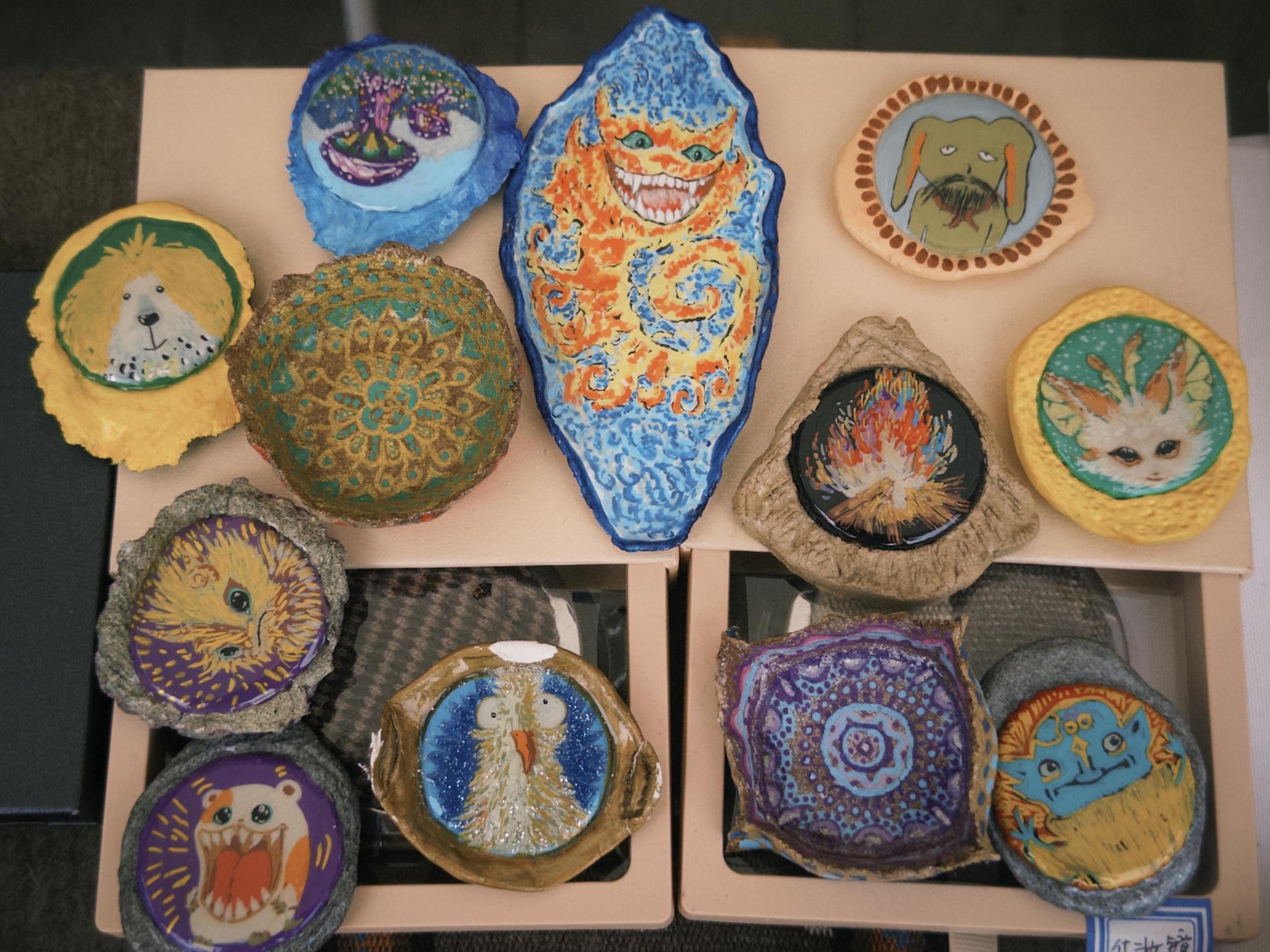
← ALL RESEARCH
03 / POLITICAL THEORY · ESSAY

Is Democracy in Crisis?

Institutions, resilience, and the meaning of crisis

OVERVIEW

Distinguishing institutional stress from systemic crisis, this essay considers democratic resilience. It draws an analogy with Chinese porcelain to think about power, historical change, and public accountability.

FULL TEXT

Is Democracy in crisis?

Is Democracy in crisis? No, although it might well seem that way at times. I argue that while many democracies are experiencing stress, and genuine backsliding has occurred in some countries, stress is not the same as crisis, and local breakage is not systemic failure.

The evidence at the moment supports resilience rather than crisis.Before assessing whether democracy is in crisis, we must be precise about what both terms mean (Clark et al 2024a). Acknowledging that there are many definition of the term (Cheibub et al 2010; Clark et al 2024b; Geddis et al 2014), I define democracy as a regime type in which there is some possibility of the alternation of government through regular, competitive elections. In this, I follow Adam Przeworski, who wrote in Democracy and Development, “Democracy is a system in which incumbents lose elections and leave office when the rules so dictate” (p. 54). Under this definition, electoral competition represents a necessary if not sufficient condition for democracy. This definition is in line with what Little and Meng (2024) call a "quasi- minimalist" (p. 149) conception, focused on "the presence of free and fair elections in which losers accept the results" (p. 149). I again turn to Przeworski, perhaps the greatest living expert on democratization around the world, to define ‘crisis’. In Crisis of Democracy (2019), he uses the term "crisis" to denote conditions in which the political system can no longer regulate rivalry and resolve conflicts peacefully. This definition distinguishes crisis from simple stress or challenge. A crisis of democracy requires evidence of structural collapse, not just merely superficial wear, or even struggle.

But to arrive at my assessment of the current democratic moment, I must first explain something about art in China a millennium ago. The difference between structural collapse and superficial wear is perhaps easier to grasp through an object than through a definition.

Consider ancient Chinese porcelain bowls. For the vast majority of the country’s ceramic history, the people who crafted these bowls remained invisible. The great kilns of the Song Dynasty, the Ru, Guan, Ge, Jun, and Ding kilns, produced extremely high-quality ceramics. Emperors collected them, and merchants shipped them to every corner of the globe. However, the hands that crafted them left behind no trace. Only some of those in later periods have workshop marks, but there was still no way to trace a piece back to any specific artisan. This pattern of art production reflected a social logic in that era: the artisan's duty was to serve and produce works that the emperor favored, but was unable to seek personal renown. Power emanated outwardly from the emperor, and all who lived served him.

John Locke examined monarchal systems like these in his Two Treatises of Government (1689), and claimed that: “Men being, as has been said, by nature all free, equal, and independent, no one can be put out of this estate and subjected to the political power of another without his own consent.”(p.95) and also the only legitimate governments are those that have the consent of the people. Therefore, any government that rules without the consent of the people can, in theory, be overthrown. (p. 219-243) The concept of being ruled without consent is the equivalent of inscribing one's name on the bottom of a bowl. Today, we regard it as completely normal to reject rule like this, but these views evolved over centuries. In a similar way, reign marks and workshop marks on porcelain gradually appeared over time. During the Xuande era (1426–1435), reign marks became a consistent and reliable feature of imperial porcelain. This process was slow and incomplete. And while some marks were authentic, others used earlier and more prestigious reign titles to inflate their perceived value.³ This system remained in disorder for centuries before gradually evolving into Song where artists were allowed to exercise their vice, take credit for what was theirs, and profit from it.

The evolution of democratic accountability is very similar to the development of these reign marks. The Magna Carta of 1215 compelled the English King to accept limitations on his power, however, in the years that followed, these limitations were repeatedly ignored and overturned. Despite these setbacks, the ideals enshrined in the Magna Carta ultimately succeeded. According to the Variety of Democracy’s (V-Dem) data, only 18% of the world's regimes were closed autocracies in 2022, compared to 54% in 1973. In addition, fifty percent of the world's regimes were electoral or liberal democracies in 2022, compared to only 22% in 1973 (Levitsky & Way, 2024, p.200). These numbers show that though democratic systems have gone through uneven and interrupted progress, they have still flourished. The political equivalent of signing porcelain bowls, that is exercising the right to vote, is much more popular now than in decades past. The public’s voice is visible and traceable.

Yet the relatively strong global position of democracy is sometimes ignored or misunderstood. Freedom House claims that global freedom had declined for 16 consecutive years, but according to its own data, the number of democracies declined by only six during that entire period (Levitsky & Way, 2024, p. 198). V-Dem claims that democracy had returned to 1986 levels, but its own data show 90 electoral and liberal democracies in 2022, compared to only 44 in 1986 (Levitsky & Way, 2024, p.199-200). As Levitsky and Way observe, "the dramatic claims by V-Dem and Freedom House of democratic decline are starkly out of line with their own data" (Levitsky & Way, 2024, p.199). The reporting of these statistics may mislead us into thinking that democracy is in crisis, while a more nuanced look at the data reveal a different conclusion. Returning to porcelain, during the Qing Dynasty, it became fashionable to inscribe newly produced bowls with the reign marks of previous dynasties, most notably those of Xuande and Chenghua. The fact that a Xuande mark was deemed worthy of forgery shows that collectors had begun to care about provenance, about where an object came from and who stood behind it. Counterfeiting is a peculiar form of homage to the very system it seeks to exploit.

The current global retreat of democracy operates on much the same principle. Regimes across the world continue to hold elections, maintain parliamentary bodies, and uphold constitutional texts on paper, yet systematically dismantle the mechanisms of accountability piece by piece. Their leaders manipulate elections and purchase the press. They also give word service to democratic institutions and civil groups that they hope to turn to their advantage. While some might content the degree of global backsliding, nearly all researchers in this area would argue that Hungary represents a widely a democratic system in retrograde (Little & Meng, 2024; Levitsky & Way, 2024; Knutsen et al., 2024). For example, among the 53 high-income countries classified by the World Bank, "all but two, Hungary and Singapore, were scored as free by Freedom House in 2022" (Levitsky & Way, 2024, p.200). Hungary is remarkable because it is a forged piece that stands out precisely because authentic democracies surround it throughout the Eurozone. However, other cases of purported backsliding are more controversial. While Brazil seems to be faltering, Levitsky and Way see in the country some evidence of democratic resilience: despite Bolsonaro's authoritarian tendencies, institutional forces proved sufficient to prevent genuine democratic erosion, and the 2022 election resulted in his defeat and its acceptance (Levitsky & Way, 2024, p.199). Under the minimalist definition adopted in this paper, centered on electoral competition and alternation of power, Brazil's democracy held.

Yet Gorokhovskaia uses the same case to argue that elections alone are insufficient, pointing to post-election political violence as evidence of real damage to civil rights and democratic norms during Bolsonaro's tenure (Gorokhovskaia, 2024, p.179).

The same country, in the same period, yields opposite verdicts depending entirely on which definition of democracy is applied. Whether Brazil represents resilience or erosion is not a question that the facts alone can settle; it is a question that the definition settles first. This is precisely why defining crisis with precision (as above) matters: under a definition that equates partial erosion of civil liberties with systemic crisis, almost any period of political stress will qualify. Under the structural definition adopted here, Brazil demonstrates that the core mechanism of democratic accountability, the capacity to remove governments through elections, has remained intact.

In line with that, Little and Meng provide the most direct empirical challenge to the crisis narrative. Examining objective indicators, specifically electoral turnover, executive constraints, and multiparty competition, they find little evidence of global democratic decline over the past decade. The rate at which incumbent governments lose elections has remained stable since the late 1990s. As they state, "if the world is experiencing major backsliding in the aggregate, we should expect to see evidence of this effect on the objective measures, particularly incumbent leaders and their parties winning elections, but we do not" (Little & Meng, 2024, p.150). So why, under the quasi-minimalist definition, do democracies endure? Levitsky and Way identify two forces sustaining democratic resilience: economic modernization, which disperses resources and makes monopolization of political control extremely difficult; and the weakness of authoritarian alternatives, since "embryonic autocracies often have proven as weak, ineffective, and ephemeral as the democracies they replaced" (Levitsky & Way, 2024, p.201). Global democracy has maintained its prevalence not despite adverse conditions, but in the face of genuinely hostile ones, including the rise of China, a more aggressive Russia, and right-wing populism destabilizing established democracies from within. "Given these developments," Levitsky and Way write, "the fact that the majority of the world's democracies have survived during the past two decades suggests a striking degree of democratic resilience" (Levitsky & Way, 2024, p.200). Let us return to those unmarked Song Dynasty bowls. They can be read as warnings that help us see how easily accountability vanishes, how naturally power forgets to sign its name. However, those bowls were unsigned because the emperor decided that signing didn’t matter, that ownership was immaterial under the role of an autocrat, or because that people were not allowed to have “works”and “voices” that were in their own names; nothing was outside the emperor’s authority or personage What followed was a long, imperfect effort to establish that signing does matter, and it is a right for the producers. From the reign mark, the workshop mark, to the collector's provenance record, each step was contested, yet the direction toward progress stayed the same for centuries. To paraphrase Theodore Parker, the arc of the moral universe is long but it tends toward democratization - both in art and politics.

The presence of forgers today, like the leaders who hold elections that they intend to manipulate and maintain constitutions which they intend to hollow out, is not evidence that the direction has reversed. It is evidence that the reign mark still carries enough authority to be worth counterfeiting. A true crisis of democracy is when wanna autocrats no longer consider trying to be like democracies, when no one is interested in the original enough to even offer up a fake.

References

Asian Ceramics, Reign Marks on Chinese Ceramics (aziatischekeramiek.nl, 2025). Cheibub, J. A., Gandhi, J., & Vreeland, J. R. (2010). Democracy and dictatorship revisited. Public choice, 143(1), 67-101. Clark, W. R., Golder, M., & Golder, S. N. (2024a). Principles of comparative politics. CQ Press. Clark, W. R., Golder, M., & Golder, S. N. (2024b). Foundations of comparative politics. CQ Press. Geddes, B., Wright, J., & Frantz, E. (2014). Autocratic breakdown and regime transitions: A new data set. Perspectives on politics, 12(2), 313-331. Gorokhovskaia, Y. (2024). Difficult to Count, Important to Measure: Assessing Democratic Backsliding. PS: Political Science and Politics, 57(2), 178–183. Knutsen, C. H., Marquardt, K. L., Seim, B., Coppedge, M., Edgell, A. B., Medzihorsky, J., Pemstein, D., Teorell, J., Gerring, J., & Lindberg, S. I. (2024). Conceptual and Measurement Issues in Assessing Democratic Backsliding. PS: Political Science and Politics, 57(2), 162– 177. Levitsky, S., & Way, L. (2024). The Resilience of Democracy's Third Wave. PS: Political Science and Politics, 57(2), 198–201. Little, A. T., & Meng, A. (2024). Measuring Democratic Backsliding. PS: Political Science and Politics, 57(2), 149–161. Little, A. T., & Meng, A. (2024). What We Do and Do Not Know about Democratic Backsliding. PS: Political Science and Politics, 57(2), 224–229.

John Locke, Second Treatise of Government (1689). Przeworski, A. (2000). Democracy and development: Political institutions and well-being in the world, 1950-1990 (No. 3). Cambridge University Press. Przeworski, A. (2019). Crises of democracy. Cambridge University Press. Weitzel, D., Gerring, J., Pemstein, D., & Skaaning, S-E. (2024). Measuring Backsliding with Observables: Observable-to-Subjective Score Mapping. PS: Political Science and Politics, 57(2), 216–223. Fareed Zakaria, F. (1997) "The Rise of Illiberal Democracy," Foreign Affairs, Vol. 76, No. 6 (November–December 1997), pp. 22–43.

Activities

Conversations, performance & things beyond the page

← BACK TO RESEARCH & PROJECTS

In practice.

Selected moments from debate, Model United Nations, and musical theatre — experiences that bring ideas into dialogue, collaboration, and performance.

01 / SPEAKING & LISTENING

Debate

As captain of her school’s Chinese debate team, Cindy helped recruit and train members, prepare for competitions, and organize school tournaments. She also helped bring students from different school divisions together to compete.

From developing an argument to questioning and responding, debate is another setting for research and expression.

02 / DIALOGUE & DIPLOMACY

Model United Nations

At the 2025 Hague International Model United Nations (THIMUN), Cindy represented Mozambique in Human Rights Committee 2, discussing domestic violence, equal access to education, and UN support for NGOs.

She helped draft resolutions, revise clauses, and coordinate with other delegates. The activity record states that the resolutions were passed by the committee.

03 / STAGE & PRODUCTION

Musical theatre

Cindy participated in productions of Hamilton and Legally Blonde, performing on stage and helping with production. Her work included leading the subtitle team for Legally Blonde.

More interests.

Reading, research, and sport are part of the picture too.

04 / CLUBS & EDITING

Clubs and academic writing

Founded an anthropology club, organized museum and art-history activities, and helped edit a student academic journal and guide student writers.

05 / SPORT

Inclusive tennis

Participated in inclusive tennis activities and volunteer interviews with athletes.

06 / SHARING

Student talks

Led discussions on Eileen Chang’s Little Reunions, and on the relationship between food, migration, and cultural memory.

Information

ABOUT THIS ARCHIVE

Cindy Wang

PROFILE

My interests lie in anthropology, art history, and social inquiry. The papers at the heart of this site explore power, expression, and social change through cultural ritual, material art, and political institutions.

Beyond research, I participate in debate, Model United Nations, community cultural projects, art research, and academic writing initiatives.

ACTIVITY ARCHIVE